
Retrolisthesis: Causes, Symptoms & Spine Treatment Guide

Retrolisthesis: Causes, Symptoms & Spine Treatment Guide

Retrolisthesis causes a vertebra to slip backwards onto the vertebral body below. Vertebrae that aren’t stacked on top of one another as they were designed interferes with neutral alignment, which disrupts the spine’s balance and stability. This can further disrupt healthy posture and movement patterns. Retrolisthesis affects the spine by causing a vertebral body to … Read more

How Many People Have Scoliosis? Key Numbers You Should Know

How Many People Have Scoliosis? Key Numbers You Should Know

Scoliosis causes the spine to develop an unnatural lateral spinal curvature that rotates, and while most people have heard of scoliosis, its prevalence may be surprising. Scoliosis is the leading spinal condition among school-aged children, but it also affects adults of all ages. Current estimates have close to seven million people diagnosed with scoliosis in … Read more

What Causes Adult Scoliosis? Key Factors Explained

What Causes Adult Scoliosis? Key Factors Explained

While childhood scoliosis is more commonly diagnosed, the rate of scoliosis increases among the aging population, and this is due to the development of degenerative scoliosis. As scoliosis progression is triggered by growth, it was once thought that progression stopped once skeletal maturity was reached, but years of observation have shown that adult scoliosis can … Read more

Non-Fusion Options for Adult Scoliosis Relief

Non-Fusion Options for Adult Scoliosis Relief

Not all cases of adult scoliosis develop in adulthood. The main type to affect adults is pre-existing, likely from adolescence, but doesn’t get diagnosed until after skeletal maturity is reached, and degenerative scoliosis affects older adults experiencing degenerative instability. Traditional scoliosis treatment often involves spinal fusion surgery, but there are also nonsurgical treatment options for … Read more

Can You Straighten a Scoliotic Spine? Here’s What To Know

Can You Straighten a Scoliotic Spine? Here’s What To Know

Progressive conditions can be more complex to treat because their nature is to get worse over time, so successful treatment has to work towards counteracting that tendency. What’s important to know about scoliosis treatment is the earlier scoliosis is diagnosed and addressed, the more potential there is for treatment success. Scoliosis is often progressive, so … Read more

Scoliosis & Osteoporosis: What You Should Know

Scoliosis & Osteoporosis: What You Should Know

Scoliosis affects the spine by causing an unnatural lateral curvature to develop that also rotates, and osteoporosis is a bone disease that causes a loss of bone tissue, making bones weak and vulnerable to injury. If osteoporosis develops in the spine, it can contribute to scoliosis progression and/or the onset of degenerative scoliosis, particularly in … Read more

Understanding Spinal Deformity: A Complete Patient Guide

Understanding Spinal Deformity: A Complete Patient Guide

A healthy spine has its vertebrae aligned and its natural curves in place. If the spine’s alignment changes and deviates from its straight position, it can become problematic and considered a spinal deformity. A typical healthy spine has a soft ‘S’ shape when viewed from either side: maintained by each spinal section’s curve. If the … Read more

The Hidden Side Effects of Scoliosis on Body & Mind

The Hidden Side Effects of Scoliosis on Body & Mind

As scoliosis is progressive, its effects can increase over time, becoming more widespread. While many scoliosis effects are visual, less-obvious effects can also develop. It’s not just the spine that’s affected by scoliosis, but also its surrounding muscles and nerves. In addition, mental health can also be affected. Scoliosis causes an unnatural lateral spinal curvature … Read more

Modern Treatment Options for Teen Scoliosis Patients

Modern Treatment Options for Teen Scoliosis Patients

Modern treatment options for teen scoliosis patients include traditional spinal fusion surgery or conservative nonsurgical treatment. Here at ScoliCare, patients benefit from a proactive and modern nonsurgical approach that offers a less-invasive alternative to spinal surgery. Scoliosis affects all ages, but the most-common type is adolescent idiopathic scoliosis. Modern nonsurgical treatment options are integrative, proactive, … Read more

Understanding Idiopathic Scoliosis: Symptoms and Diagnosis

Understanding Idiopathic Scoliosis: Symptoms and Diagnosis

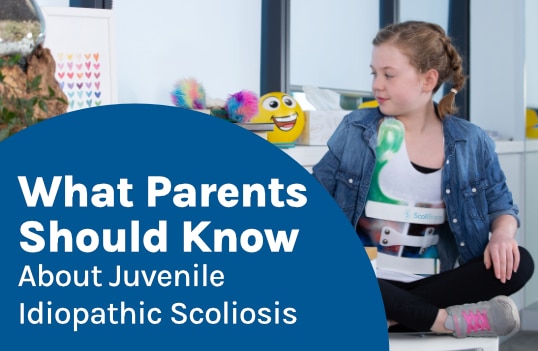
Understanding idiopathic scoliosis and the potential benefits of early diagnosis is crucial, especially for parents. We don’t know what causes the initial onset of idiopathic scoliosis, but we understand the main trigger for progressive scoliosis: growth. Idiopathic scoliosis accounts for the majority of scoliosis cases, has no single-known cause, and is diagnosed through a physical … Read more