
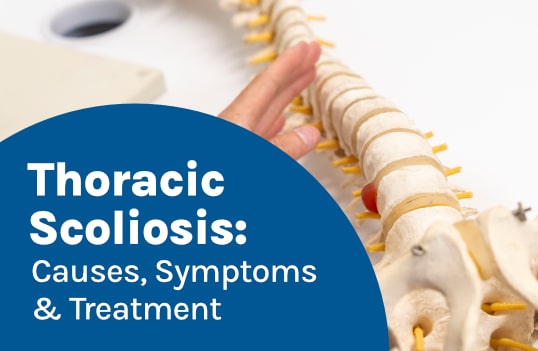
There are many different types of scoliosis with unique causes, symptoms, rates of progression, and treatment needs. Scoliosis causes the spine to develop an unnatural sideways curvature that also rotates, and it most commonly develops in the thoracic spinal section as thoracic scoliosis.
Thoracic scoliosis develops in the largest spinal section and is the most prone to rapid advancement, higher degrees of rotation, and pain. Most cases of scoliosis are idiopathic, with no known cause, and treatment plans need to be fully customized.
Scoliosis can develop in any of the spine’s three main sections but most commonly affects the middle/upper back.
Diagnosing Thoracic Scoliosis
Diagnosing scoliosis involves a comprehensive initial assessment with a physical examination, forward bend test, and taking the patient’s medical and family history (1, 2).
If there is a family history of scoliosis, this is considered a primary risk factor, and if the physical exam shows indicators of scoliosis, further testing in the form of a scoliosis X-ray is warranted (1, 2).
The only way to diagnose scoliosis is through X-ray imaging; the presence of an unnatural lateral spinal curve has to be confirmed, along with its size, location, and rotational component (1).
Because scoliosis causes the spine to curve unnaturally and twist, it’s a 3-dimensional spinal condition and needs to be addressed as such.
Determining curve size is important because a minimum Cobb angle of 10 degrees is needed to be considered a true scoliosis, and a patient’s Cobb angle further classifies scoliosis as mild scoliosis , moderate scoliosis, or severe scoliosis (1).
Treatment plans need to be fully customized around a number of important variables, and Cobb angle is a key measurement that determines the course of treatment.
Patients recently diagnosed need to fully understand the progressive nature of scoliosis; most cases will get worse over time, even those initially diagnosed as mild.
There are three main spinal sections: the cervical spine, thoracic spine, and the lumbar spine. Scoliosis can develop in any of these main sections, or in more than one.
A diagnosis of thoracic scoliosis means the thoracic spine (middle/upper back) curves unnaturally to the side and rotates, and curvature location is another key factor that treatment plans are shaped around.
Thoracic Scoliosis Causes
Causation is important to determine because if the cause of scoliosis is known, it needs to be addressed with treatment; otherwise, only the symptoms of scoliosis are being improved, but not the scoliosis itself.
In most cases of scoliosis, we don’t know the cause: idiopathic scoliosis. Approximately 80 percent of scoliosis cases are idiopathic (1).
The remaining cases involve neuromuscular scoliosis caused by a larger neuromuscular or muscular condition such as cerebral palsy, muscular dystrophy, spina bifida, or spinal muscular atrophy, degenerative scoliosis caused by degenerative instability, and congenital scoliosis caused by spinal malformations that develop in utero.
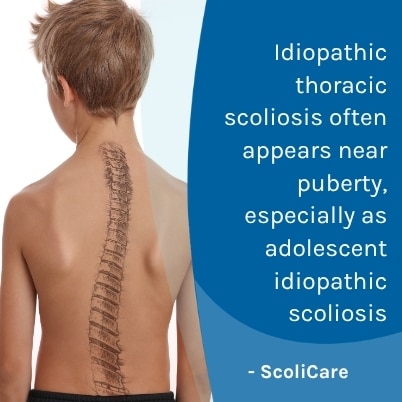
The cause of idiopathic thoracic scoliosis is unknown, and the most prevalent type of scoliosis is adolescent idiopathic scoliosis diagnosed around the onset of puberty in females and a little later in males (3).
Idiopathic scoliosis is thought to be multifactorial: caused by a number of factors, or the combination of certain factors, that can vary from patient to patient.
When it comes to treatment needs, there are never guaranteed outcomes, but with early detection and intervention, in many cases, surgical intervention can be avoided (3, 4).
Knowing the early signs of scoliosis can lead to early detection, so awareness is crucial.
Thoracic Scoliosis Symptoms
Scoliosis symptoms are shaped by a number of factors, including where in the spine the scoliosis develops.
Scoliosis effects can be widespread, particularly when severe, but the majority of its direct effects are felt in and around the area of the spine that’s directly affected.
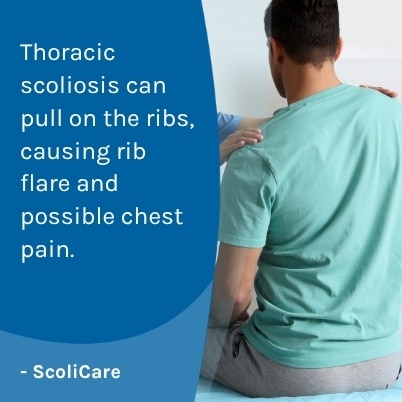
In cases of thoracic scoliosis, the thoracic spine, as the only spinal section attached to the rib cage, can pull on the rib cage, causing what’s known as a rib flare, and as thoracic scoliosis can involve a higher degrees of rotation, chest pain may develop (3).
Postural changes are the earliest signs of scoliosis in children, including uneven shoulders, a prominent shoulder blade, uneven hips, a noticeable arch in the rib cage, an uneven waist line, arm- and leg-length discrepancy, and changes to balance, coordination, proprioception, and gait are also common (3).
When it comes to scoliosis involving back, nerve, and muscle pain, mild cases tend to involve mild symptoms and are less likely to involve pain than cases of moderate and severe scoliosis.
When it comes to predicting how painful a patient’s scoliosis is or may become, patient age is a key factor. A child’s growing spine is constantly being lengthened, and this motion counteracts the compressive force of the scoliosis.
When skeletal maturity is reached and growth stops, scoliosis becomes compressive, and while compression isn’t the only cause of scoliosis pain, it is a primary cause as the uneven pressure and forces of scoliosis can disrupt back, muscle, and nerve health.
Thoracic scoliosis is also more prone to rapid advancement, and progression makes scoliosis more severe, treatment needs more complex, and symptoms more noticeable.
Growth is the main trigger for progression, so cases of adolescent idiopathic scoliosis that develop in the thoracic spine are the most likely to progress quickly and require a proactive treatment approach (4).
Thoracic Scoliosis Treatment Options
Although we don’t always know what triggers the initial onset of thoracic scoliosis, we know it’s growth that triggers progression in children, and age-related spinal degeneration that triggers progression in adult scoliosis (4, 5).
What’s more important is how a diagnosis of scoliosis is responded to with treatment. Is treatment started immediately when curves are at their smallest, or is treatment delayed in favor of a passive watch-and-wait approach?
Because scoliosis is progressive, most cases will increase in severity over time, so merely observing a patient’s scoliosis for any length of time can equate to wasting valuable treatment time while conditions become more complex to treat (4).
If scoliosis is progressing, the spine’s unnatural curve and rotation is increasing, and condition effects are becoming more overt, disruptive, and established; in addition, treatment needs are becoming more complex as the spine’s increasing rigidity makes it less responsive to treatment.
If scoliosis is left untreated and a certain severity level is reached, in many cases, surgical treatment (spinal fusion) is the only remaining recourse (6), but when treatment is started early, many cases are highly treatable and responsive to a proactive and customized nonsurgical treatment plan (4).
Conservative Treatment Options
Scoliosis surgery still has a place in scoliosis treatment, but spinal fusion is invasive and can disrupt the spine’s natural flexibility, strength, and function (6).
A nonsurgical treatment plan is working towards corrective results; the goal is managing curve progression through proactive treatment that may prevent progression, increasing symptom severity, and the need for invasive surgical treatment.
The complex nature of scoliosis requires a multifaceted treatment approach that can impact scoliosis on every level.
Nonsurgical treatment is integrative and combines the potential of scoliosis-specific physical therapy and the power of rehabilitative exercise with corrective 3-dimensional bracing, and Chiropractic BioPhysics® as an adjunctive treatment (7, 8).
ScoliBalance®
ScoliBalance® is a scoliosis-specific exercise program used to treat scoliosis in all age groups; the program combines the most current practices and principles of physical therapy, exercise rehabilitation, and chiropractic for 3-dimensional corrective results (7).
Designed by chiropractor, Dr. Jeb McAviney, and physical therapist Rose Mirenzi, ScoliBalance® combines the best of what scoliosis-specific chiropractic care and established scoliosis-specific exercise-based treatment programs like the Schroth Method and the Scientific Exercise Approach to Scoliosis (SEAS) has to offer (7, 8).
Scoliosis-specific Chiropractic BioPhysics® can be helpful as an adjunctive treatment that uses manual adjustments, and a variety of chiropractic techniques, to improve the spine’s alignment and balance (8).
Scoliosis-specific rehabilitative exercise is applied to strengthen the spine’s surrounding muscles for more support, address any related muscular imbalance for more stability, increase spinal flexibility, and reduce curve size (7).
Mirror Image® exercise is used to teach postural awareness so treatment results can be sustained and patients can integrate the corrections into daily life and activity for long-term improvements to spinal health (7, 8).
ScoliBrace®
The ScoliBrace® is a custom 3-dimensional corrective scoliosis brace that’s evidence-based and customized to address the specifics of a patient’s posture, curve type, and severity (7).
The ScoliBrace® individualizes potential treatment results through the use of an overcorrective approach to improve spinal alignment and balance through spinal coupling, and as the spine is held in an overcorrective position in the brace, the brain and body are being simultaneously retrained to sustain this position out of the brace (7).
The ScoliBrace® harnesses principles of spinal coupling, over-correction and Mirror Image®, particularly for adolescents with idiopathic scoliosis; growing spines are more flexible and responsive to efforts to improve its position (7).
ScoliBalance®, the ScoliBrace®, and Chiropractic BioPhysics® complement each other as they are working towards the same goal of improving the spine’s position and body posture, and because the modern ScoliBrace® is designed to work with movement, the spine’s natural movement-based design and function are prioritized (7, 8).
Conclusion
Thoracic scoliosis develops in the middle/upper back and is the most prone to rapid advancement and vertebral rotation.
The most common symptoms of thoracic scoliosis are uneven posture, and back, muscle, and nerve pain.
While pain due to nerve compression is more closely associated with thoracic scoliosis in adults, children may also experience varying degrees of back and muscle pain, and if a patient’s scoliosis isn’t painful at the time of diagnosis but becomes painful over time, this is a sign that progression is occurring and treatment needs are becoming more urgent and complex.
If thoracic scoliosis is left untreated, potential complications may include difficulty breathing, cardiac issues, digestive issues, mobility changes, increasing pain, and the need for invasive spinal fusion surgery.
A proactive nonsurgical treatment plan that’s started early while curves are small and the spine is still flexible has the most potential to prevent mild curves from becoming severe curves.
Find Your Nearest Clinic
ScoliCare Clinics, affiliates and product providers are in over 200 locations around the world. Find your nearest ScoliCare location here.


References:
- Janicki JA, Alman B. Scoliosis: Review of diagnosis and treatment. Paediatr Child Health. 2007 Nov;12(9):771-6. doi: 10.1093/pch/12.9.771. PMID: 19030463; PMCID: PMC2532872
- Understanding Genetic Factors in Idiopathic Scoliosis, a Complex Disease of Childhood – Curr Genomics. 2008 Mar; 9(1): 51–59 Source
- Weinstein SL. The Natural History of Adolescent Idiopathic Scoliosis. J Pediatr Orthop. 2019 Jul;39(Issue 6, Supplement 1 Suppl 1):S44-S46. doi: 10.1097/BPO.0000000000001350. PMID: 31169647
- Negrini, S., Donzelli, S., Aulisa, A. G., Czaprowski, D., Schreiber, S., de Mauroy, J. C., … & Zaina, F. (2018). 2016 SOSORT guidelines: orthopaedic and rehabilitation treatment of idiopathic scoliosis during growth. Scoliosis and spinal disorders, 13(1), 3
- Kotwal S, Pumberger M, Hughes A, Girardi F. Degenerative scoliosis: a review. HSS J. 2011 Oct;7(3):257-64. doi: 10.1007/s11420-011-9204-5. Epub 2011 Jun 11. PMID: 23024623; PMCID: PMC3192887
- Fan H, Wang Q, Huang Z, Sui W, Yang J, Deng Y, Yang J. Comparison of Functional Outcome and Quality of Life in Patients With Idiopathic Scoliosis Treated by Spinal Fusion. Medicine (Baltimore). 2016 May;95(19):e3289. doi: 10.1097/MD.0000000000003289. PMID: 27175629; PMCID: PMC4902471
- Marchese R, Du Plessis J, Pooke T, McAviney J. The Improvement of Trunk Muscle Endurance in Adolescents with Idiopathic Scoliosis Treated with ScoliBrace® and the ScoliBalance® Exercise Approach. J Clin Med. 2024 Jan 23;13(3):653. doi: 10.3390/jcm13030653. PMID: 38337346; PMCID: PMC10856658
- Haggard, J. S., Haggard, J. B., Oakley, P. A., & Harrison, D. E. (2017). Reduction of progressive thoracolumbar adolescent idiopathic scoliosis by chiropractic biophysics®(CBP®) Mirror Image® methods following failed traditional chiropractic treatment: a case report. Journal of Physical Therapy Science, 29(11), 2062-2067
More news
-
 15 July 2024
In recent years, patient-centred care has revolutionised the approach to scoliosis treatment by focusing on the unique needs, preferences and values of each patient. This approach places patients at the…
-
 1 August 2025
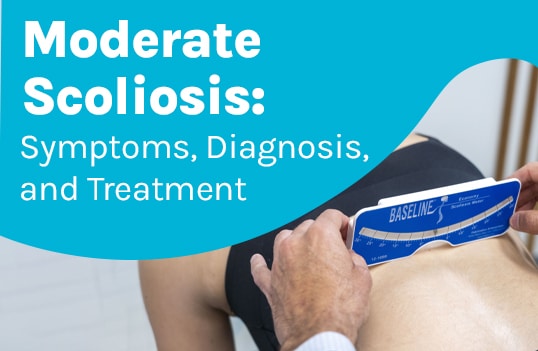
Scoliosis ranges in severity from mild to moderate and severe; it's important to understand the different scoliosis severity levels because, as a progressive condition, the nature of scoliosis is to…
-
 17 October 2025
Scoliosis can affect adults too—whether ongoing or new, it’s often painful. Treatment focuses on fall prevention and restoring spinal balance.