There are a number of factors that shape a patient’s potential experience with scoliosis, one of which is the type of scoliosis, determined by causation. While the most prevalent form of scoliosis has no known cause, there are atypical types, like neuromuscular scoliosis, that are associated with known causes.
Neuromuscular scoliosis is caused by the presence of a neurological or muscular disorder disrupting communication between the brain and muscles and nerves that support healthy spinal alignment and body posture. Scoliosis is a common complication of neuromuscular conditions such as spina bifida, muscular dystrophy, cerebral palsy, or spinal muscular atrophy.
When there is an underlying pathology causing the onset of scoliosis, these cases tend to be more severe and complex to treat.
What is Neuromuscular Scoliosis?
Neuromuscular scoliosis is a type of scoliosis that develops due to issues with the nerves and muscles that support healthy posture and movement patterns (1).
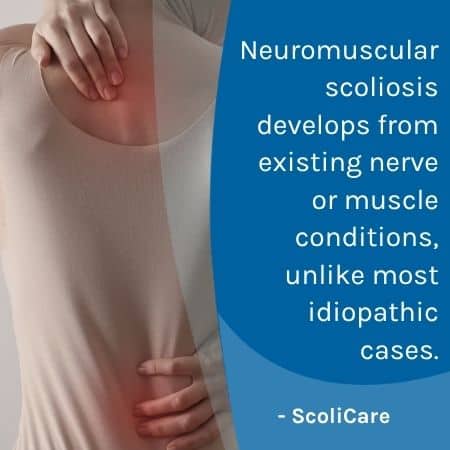
While most cases of scoliosis are idiopathic (no single-known cause), neuromuscular scoliosis onset is caused by the presence of a pre-existing neurological or muscular condition, and neuromuscular scoliosis develops as a related complication (2).
While not everyone with a neurological or muscular disorder will develop scoliosis, it is a common complication that warrants awareness.
If there is a pre-existing condition disrupting communication between the brain, muscles, and nerves that support the spine, an unnatural spinal curvature can develop, and because there is an underlying condition causing it, the curve can be rigid and severe.
Neuromuscular scoliosis doesn’t just affect spinal alignment; it also impacts the spine’s surrounding muscles, nerves, mobility, and balance (2).
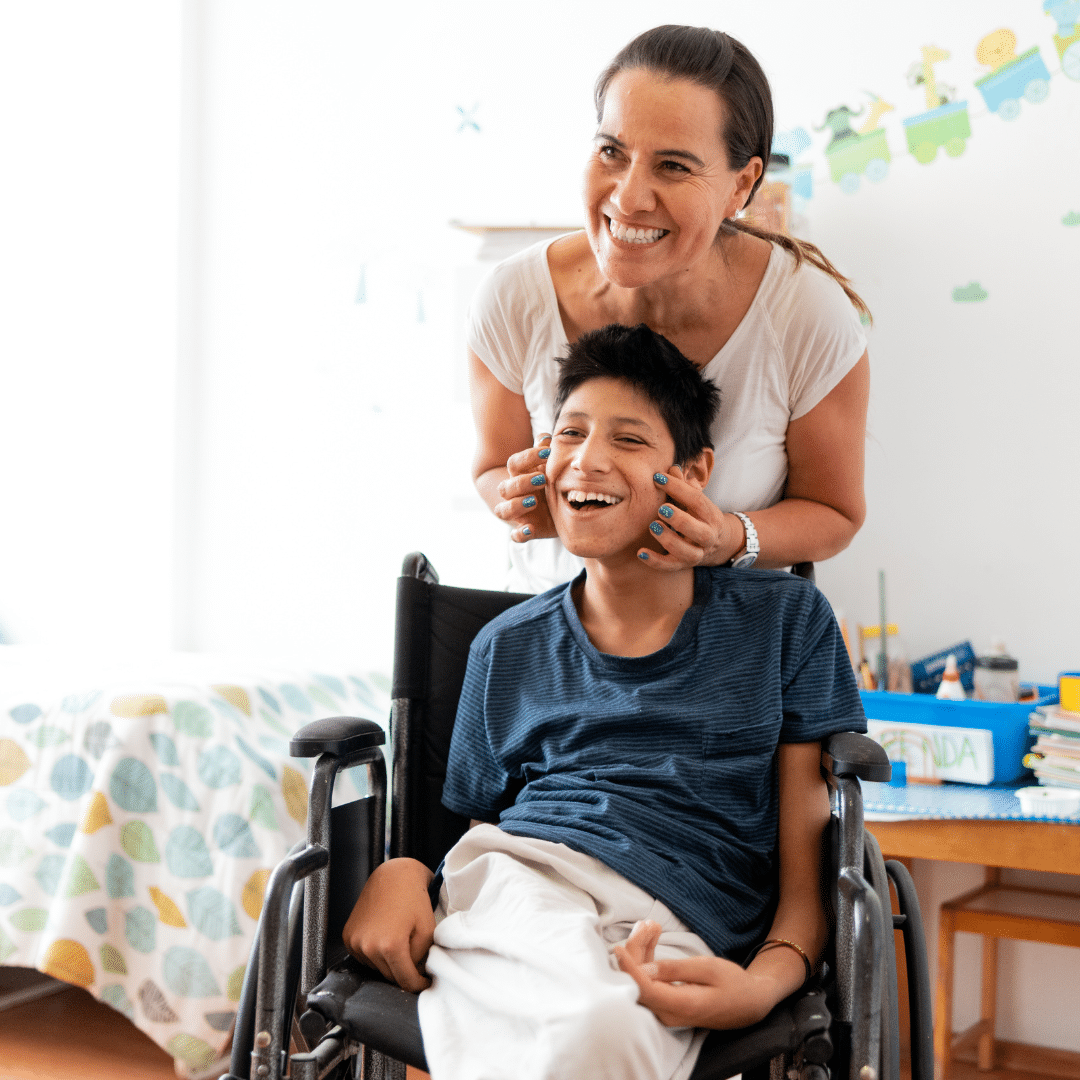
Some neuromuscular scoliosis patients will require walking aids and/or become non-ambulatory and require a wheelchair (2).
Symptoms of Neuromuscular Scoliosis
Because neuromuscular scoliosis can disrupt spinal, muscle, and nerve health, it can cause a number of symptoms.
Mobility can become a challenge as disruptions to balance and stability and a limited range of motion can make walking and/or standing difficult (2).
Neuromuscular scoliosis patients are more at risk of injury through a fall, hence the use of mobility aids like walkers and wheelchairs.
In addition to impaired balance, muscle weakness and issues with neuromuscular control can develop (2).
Like other types of scoliosis, progression is triggered by growth, but NMS cases can also progress due to worsening of the pre-existing condition that caused the scoliosis: the neurological or muscular condition.
Pain and discomfort is also common and can involve back, muscles, and or nerve pain, and pelvic obliquity is a common secondary complication (1, 2).
Pelvic obliquity means the pelvis is unnaturally tilted, and this shift in its position means upper body weight isn’t evenly distributed over the lower body and can disrupt healthy movement patterns, along with increasing risk of hip dislocations (1, 2).
Diagnosing Neuromuscular Scoliosis
Scoliosis severity ranges widely from mild to moderate and severe cases, and its clinical presentation is shaped by severity of the pre-existing condition, the severity of the scoliosis itself (size and angle of rotation), and related symptoms.
Cases of neuromuscular scoliosis are often initially assessed due to noticeable changes in posture such as uneven shoulders, shoulder blades, and hip heights, trunk rotation, mobility changes, and pain (2, 3).
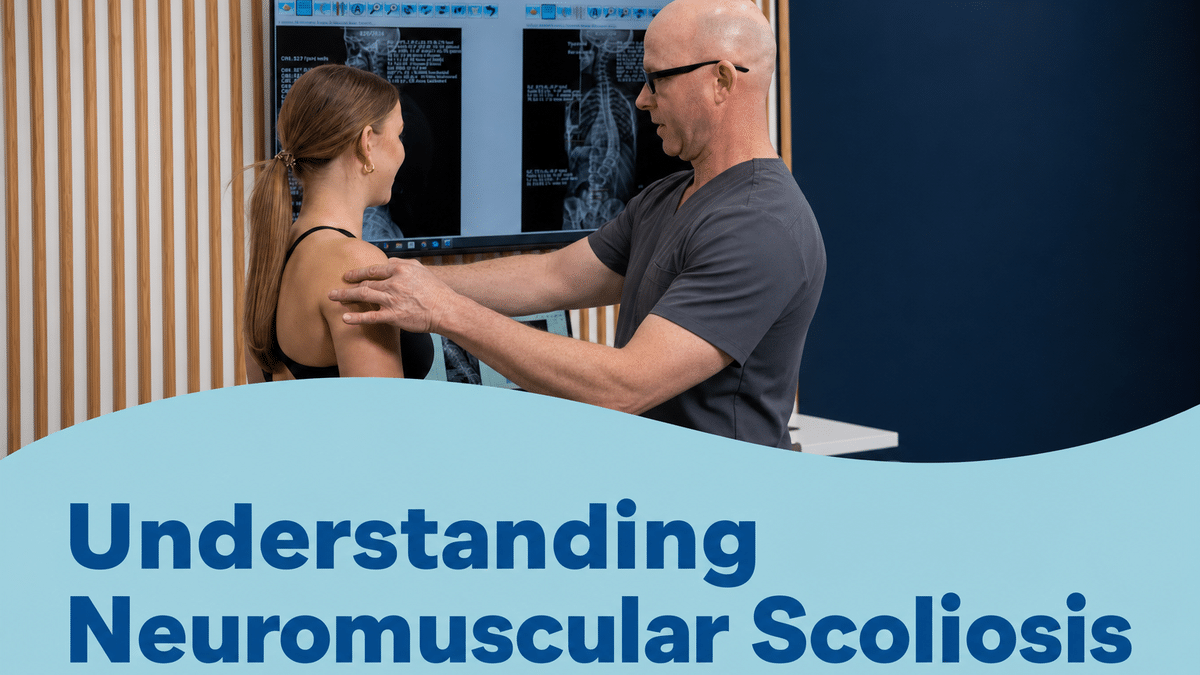
Neuromuscular scoliosis is diagnosed through a comprehensive assessment and physical examination that includes the patient’s medical and family history, assessing strength, mobility, and posture, and X-ray imaging (3).
In some cases, particularly those that include loss of neurological control, advanced imaging techniques including CT and MRI scans are performed for a detailed view of what’s happening in and around the spine, and to identify any underlying conditions (3).
Neuromuscular Scoliosis Treatment Options
Treating neuromuscular scoliosis can be complex because the underlying cause of the scoliosis needs to be the focus of treatment.
Customized treatment plans are necessary to address the specifics of a patient’s scoliosis and related health issues (3).
A comprehensive initial assessment is performed to determine the best course of treatment, and patients are funneled into nonsurgical or surgical treatment based on the specifics of each individual case.
Nonsurgical treatments can include bracing and a scoliosis-specific exercise rehabilitation program (ScoliBalance®) that works towards slowing progression and improving quality of life, but if the scoliosis is progressing rapidly and causing functional deficits and/or pain, surgical treatment may be recommended (3).
While the ScoliBrace® is most commonly prescribed to treat idiopathic scoliosis in children, ScoliCare does offer the ultra-corrective ScoliBrace® for NMS patients. For patients who are wheelchair bound, a custom ScoliBrace® can be designed as a type of suspension brace; this can help slow progression and improve sitting posture and balance while in the wheelchair (3, 4).
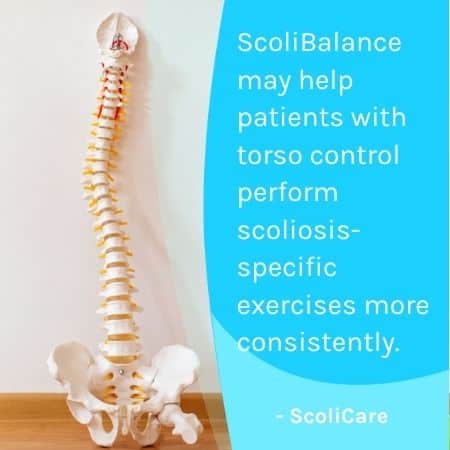
Nonsurgical treatment involves the prescription of scoliosis-specific exercises designed around a patient’s curve type, severity, symptoms, and treatment goals (3).
For patients with neuromuscular control over their torso, ScoliBalance® has more potential as patients are better able to consistently perform a number of key scoliosis-specific rehabilitative exercises as part of treatment.
ScoliBalance® works towards restoring muscle strength, flexibility, balance, and endurance; it may also increase mobility, reduce pain, improve respiratory function, and improve posture.
Early detection and intervention with a comprehensive and highly-customized treatment plan is key to improvement (3).
Conclusion
Neuromuscular scoliosis is a type of scoliosis that’s caused by the presence of an underlying neurological or muscular condition, and because the scoliosis develops as a related complication, it can involve severe curves with complex treatment needs.
Here at ScoliCare, a comprehensive initial assessment is given to every patient, and when it comes to common indicators of neuromuscular scoliosis, changes in mobility, posture, and comfort are assessed.
To diagnose neuromuscular scoliosis, a physical examination is performed that focuses on a patient’s family and medical history, posture, strength, and mobility, and X-ray imaging is necessary to confirm the size and rotation of the scoliosis; in cases where neurological deficits are occurring, further testing in the form of CT and MRI scans are common.
Neuromuscular scoliosis can impact people of all ages but is most commonly diagnosed in children, and as growth is a trigger for progression, early assessment and intervention are crucial.
Find Your Nearest Clinic
ScoliCare Clinics, affiliates and product providers are in over 200 locations around the world. Find your nearest ScoliCare location here.


References:
- Vialle R, Thévenin-Lemoine C, Mary P. Neuromuscular scoliosis. Orthop Traumatol Surg Res. 2013 Feb;99(1 Suppl):S124-39. doi: 10.1016/j.otsr.2012.11.002. Epub 2013 Jan 19. PMID: 23337438
- Putzier M, Groß C, Zahn RK, Pumberger M, Strube P. Besonderheiten neuromuskulärer Skoliosen [Characteristics of neuromuscular scoliosis]. Orthopade. 2016 Jun;45(6):500-8. German. doi: 10.1007/s00132-016-3272-7. PMID: 27197823
- Loughenbury PR, Tsirikos AI. Current concepts in the treatment of neuromuscular scoliosis: clinical assessment, treatment options, and surgical outcomes. Bone Jt Open. 2022 Jan;3(1):85-92. doi: 10.1302/2633-1462.31.BJO-2021-0178.R1. PMID: 35084206; PMCID: PMC9047085
- Loughenbury PR, Tsirikos AI. Current concepts in the treatment of neuromuscular scoliosis: clinical assessment, treatment options, and surgical outcomes. Bone Jt Open. 2022 Jan;3(1):85-92. doi: 10.1302/2633-1462.31.BJO-2021-0178.R1. PMID: 35084206; PMCID: PMC9047085
More news
-
 14 March 2021
Kurt Cobain and his Scoliosis Part of our series of famous people who have/had a Scoliosis. Next up is Kurt Cobain! Kurt Cobain is best known as the lead…
-
 30 April 2024
Understanding Neuromuscular Scoliosis Scoliosis, a condition characterised by an abnormal curvature of the spine, affects millions of people worldwide. While idiopathic scoliosis, a scoliosis with no known cause, is the…
-
 8 August 2024
Receiving a scoliosis diagnosis often brings a flood of questions and concerns about the future. How did this happen? What are the scoliosis treatment options? Is scoliosis surgery necessary? Navigating…