
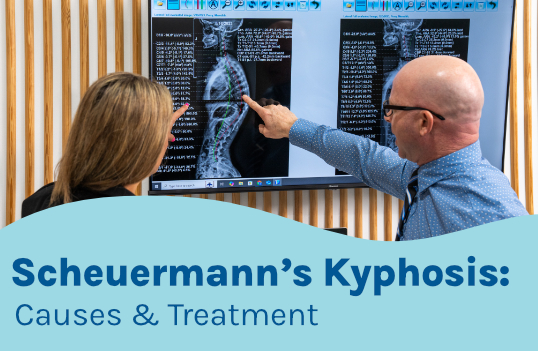
Scheuermann’s kyphosis is a structural spinal condition that usually develops during adolescence and causes the upper back to become more rounded than normal. Treatment often focuses on early assessment, monitoring during growth, kyphosis-specific exercise, and, in some cases, bracing. Recognising the signs early can give families more time to understand the condition, monitor changes, and consider appropriate treatment options.
Scheuermann’s kyphosis causes the middle/upper back’s outward curve to become excessive and over-pronounced. Scheuermann’s kyphosis is a structural spinal condition caused by the spine’s vertebrae having structural abnormalities.
There is a healthy range of kyphosis, but if a person’s kyphosis angle falls beyond a normal range, the curve size can be problematic.
Kyphosis
The spine’s health and function are shaped by its healthy curves and overall position. The two main types of spinal curves are lordosis and kyphosis (1).
Lordosis refers to the spine’s natural inward curve, while kyphosis refers to the spine’s outward curve; the cervical and lumbar spinal sections feature lordotic curves, and the thoracic spine is kyphotic (1).
The thoracic spine is the largest spinal section and has a natural outward curve, and together, the spine lordosis and kyphosis maintain the spine’s balance and stability(1).
The thoracic spine is also the only section of the spine that attaches to the rib cage, so it forms the thoracic cage and protects important organs like the lungs and heart. The thoracic spine also serves as an attachment point for multiple muscles and supportive structures (2).
The thoracic spine is designed more around stability but also facilitates rotational movement (twisting) (2).
Curve size is measured in degrees, and while there is a healthy range of kyphosis, too much kyphosis can be problematic and impact the spine’s overall health and function (1).
A healthy range of kyphosis is considered to fall within 20 and 45 degrees, with 50+ degrees often considered an excessive curvature.
Conservative treatment is more effective when the condition’s early signs are noticed and treatment is started early.
There are also different types of kyphosis determined by the cause, and too much kyphosis is known simply as kyphosis or hyperkyphosis (3).
Scheuermann’s Kyphosis Causes
The underlying nature of Scheuermann’s kyphosis is structural and involves the back of certain vertebral bodies in the thoracic spine growing faster than the front, and this causes vertebrae to have an abnormal shape and wedge forward (3).
Healthy vertebrae are rectangular-shaped because they can stack evenly on top of one another forming a straight and neutral alignment. Scheuermann’s kyphosis is commonly associated with three or more vertebrae becoming wedge-shaped, which can contribute to the spine curving forward more than usual.
A common factor in cases of Scheuermann’s is the uneven formation of vertebral growth plates during growth contributing to the uneven growth of vertebral bodies (3).
Scheuermann’s disease is commonly diagnosed in adolescence, when a lot of growth is happening, and watching for signs of an unnatural spinal curve can help with early diagnosis. Warning signs include a rounded-forward posture, upper back pain, and stiffness (3).
Scheuermann’s kyphosis differs from other types of kyphosis; curves are rigid and more complex to treat than too much kyphosis caused by poor posture or spinal degeneration (3, 4).
Postural Hyperkyphosis
Unlike Scheuermann’s disease, postural kyphosis isn’t structural, so is less complex to treat and is also the most common type of hyperkyphosis.
Postural kyphosis is caused by chronic poor posture that, over time, causes weak back muscles due to a lack of support, and this type of hyperkyphosis is increasing among modern young adults due to the amount of time spent looking down at screens (4).
Age-Related Hyperkyphosis
While Scheuermann’s kyphosis involves misshaped vertebrae, age-related hyperkyphosis is caused by weaker muscles and ligaments, a lack of support, and injury.
Aging adults are less able to counteract gravity’s downward pull, and particularly when paired with low bone density, the compressive force of the excessive kyphosis can cause the front of vertebral bodies to collapse and form a sharp angle that causes the spine to wedge forward (5).
For adults with age-related hyperkyphosis, maintaining strength, balance, and upright posture can help support spinal function and reduce fall risk.
Treatment plans are shaped around the type of kyphosis and its underlying cause. It’s important for patients to understand the difference between addressing the symptoms of hyperkyphosis and treating their cause: the spine’s structural changes and improper position.
Scheuermann’s kyphosis Treatment Options
Treating Scheuermann’s kyphosis can be complex because it involves a structural deformity, and Scheuermann’s curves can be excessive and rigid (3).
Most often diagnosed during adolescence, rapid growth can cause curve progression and pain (3).
A rounded upper back, middle back pain, middle back stiffness, reduced flexibility, and muscle pain are common symptoms to watch for and manage (3). Recognizing the symptoms of hyperkyphosis early can mean starting treatment early, before the curve size increases during growth or symptoms become harder to manage (3).
Young patients with Scheuermann’s disease can also suffer from emotional stress and body image issues, and the best way to minimize the potential effects is to treat it proactively (3, 6).
Because Scheuermann’s kyphosis is structural, a change in position won’t impact the curve. An effective and personalized treatment plan is needed to help restore a healthy degree of thoracic kyphosis and prevent normal kyphosis from becoming severe kyphosis.
Treatment is also the best way to help patients experience symptomatic improvement from severe pain and increasing disability.
Kyphosis-Specific Exercise and Brace Treatment
Most cases of Scheuermann’s kyphosis will require more than one type of treatment because it involves a spinal deformity. Kyphosis-specific exercise and kyphosis-specific bracing are the first line of treatment (3, 6).
A kyphosis-specific rehabilitative exercise program is personalized and uses Mirror Image® exercise to teach patients how to position their spines and bodies during movement to support the spine’s healthier position and counteract the hyperkyphosis (6).
Muscles surrounding the spine are strengthened and balanced through kyphosis-specific exercise and targeted exercise so the spine has more support and stability (6).
Because Scheuermann’s curves can be rigid, kyphosis-specific exercise may be combined with corrective kyphosis-specific bracing when clinically appropriate, especially during growth (6, 7).
Kyphosis-specific bracing is recommended for patients who still have enough spinal flexibility to perform kyphosis-specific exercise, and bracing is typically used to support upright posture, improve the spine’s position, and stop curve progression while a lot of growth is happening (6, 7).
When the body and spine are held in a more upright and neutral position, the spine benefits, and the spine’s surrounding muscles and supportive structures also benefit, along with the body’s overall alignment.
Conclusion
Scheuermann’s kyphosis causes an excessive outward spinal curve to develop in the thoracic spine.
Symptoms of hyperkyphosis include a rounded-forward upper back, chronic back pain and stiffness, muscle pain and stiffness, a reduced range of motion, fatigue, and stress.
Scheuermann’s kyphosis most often appears during adolescence, and symptoms can become more noticeable during periods of rapid growth. Scheuermann’s is caused by disproportional vertebral body growth and/or anterior wedging.
To correct kyphosis, the first step is knowing the signs to watch for and when they appear. Because adolescents are the most at risk, if a child or teenager is developing a noticeably rounded upper back, back pain, stiffness, or posture changes that do not correct easily, a spine assessment can help clarify whether Scheuermann’s kyphosis may be present.
To treat Scheuermann’s kyphosis, a personalized treatment plan may include kyphosis-specific exercise, kyphosis-specific bracing, monitoring, and guidance based on the patient’s age, curve size, flexibility, symptoms, and growth stage.
Untreated Scheuermann’s disease can get worse with growth and/or degenerative changes to spinal health, but a comprehensive assessment is the first step in developing an individualized Scheuermann’s kyphosis treatment plan.
Find Your Nearest Clinic
ScoliCare Clinics, affiliates and product providers are in over 200 locations around the world. Find your nearest ScoliCare location here.

References:
- InformedHealth.org [Internet]. Cologne, Germany: Institute for Quality and Efficiency in Health Care (IQWiG); 2006-. In brief: How does the spine work? [Updated 2025 Aug 28]. Available from: https://www.ncbi.nlm.nih.gov/books/NBK279468/Mansfield
- Waxenbaum JA, Reddy V, Margetis K. Anatomy, Back, Thoracic Vertebrae. [Updated 2026 Jan 31]. In: StatPearls [Internet]. Treasure Island (FL): StatPearls Publishing; 2026 Jan-. Available from: https://www.ncbi.nlm.nih.gov/books/NBK459153/
- JT, Bennett M. Scheuermann Disease. [Updated 2023 Jul 31]. In: StatPearls [Internet]. Treasure Island (FL): StatPearls Publishing; 2026 Jan-. Available from: https://www.ncbi.nlm.nih.gov/books/NBK499966/
- Lam JC, Mukhdomi T. Kyphosis. [Updated 2023 Aug 8]. In: StatPearls [Internet]. Treasure Island (FL): StatPearls Publishing; 2026 Jan-. Available from: https://www.ncbi.nlm.nih.gov/books/NBK558945/
- Katzman WB, Wanek L, Shepherd JA, Sellmeyer DE. Age-related hyperkyphosis: its causes, consequences, and management. J Orthop Sports Phys Ther. 2010 Jun;40(6):352-60. doi: 10.2519/jospt.2010.3099. PMID: 20511692; PMCID: PMC2907357.
- Yang S, Yi YG, Chang MC. The Effectiveness of Exercise Programs in Adolescents with Thoracic Kyphosis: A Narrative Review. Healthcare (Basel). 2024 Jul 29;12(15):1503. doi: 10.3390/healthcare12151503. PMID: 39120206; PMCID: PMC11312307
- Weiss HR, Turnbull D, Bohr S. Brace treatment for patients with Scheuermann’s disease – a review of the literature and first experiences with a new brace design. Scoliosis. 2009 Sep 29;4:22. doi: 10.1186/1748-7161-4-22. PMID: 19788753; PMCID: PMC2761858
More news
-
 3 July 2026
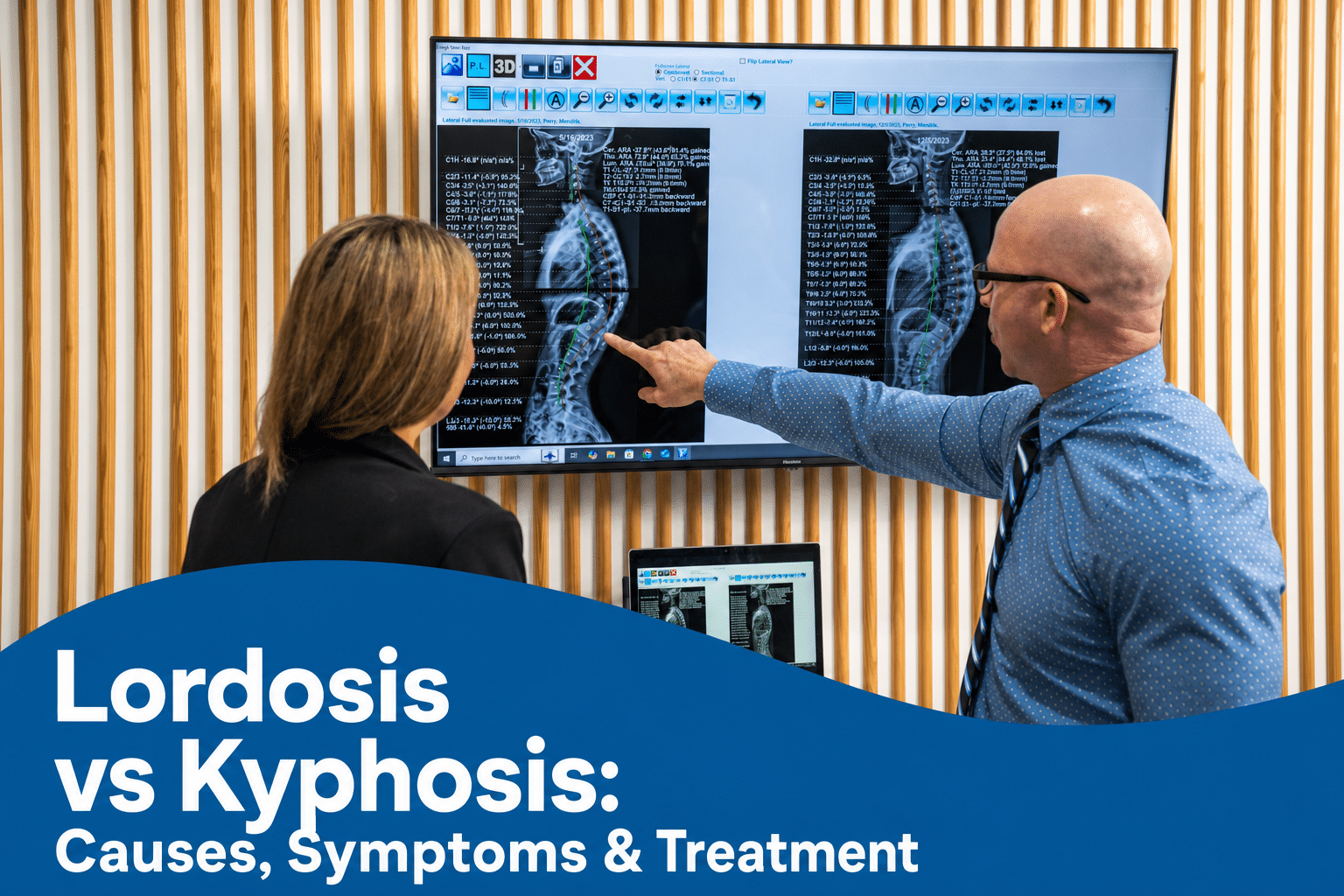
Healthy lordosis and kyphosis keep the spine strong and balanced. Too much or too little of either curve can affect posture, movement, and function.
-
 17 February 2026
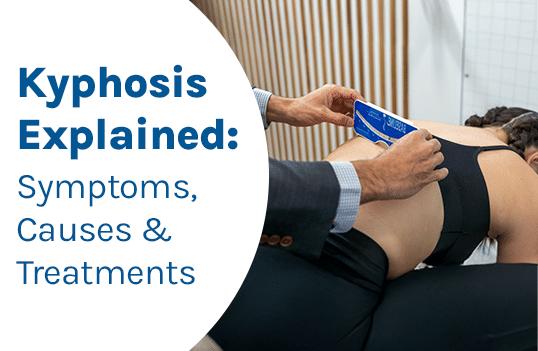
The thoracic spine's natural kyphosis supports posture and function—but when excessive, it leads to hyperkyphosis, causing rounded shoulders and imbalance.
-
 10 August 2026
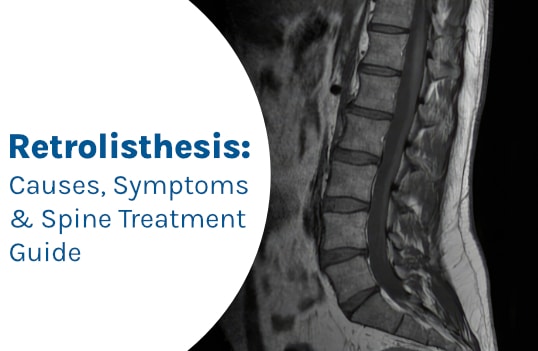
Retrolisthesis is a backward vertebral slip that can affect posture, stability, and nerves. Early diagnosis helps guide effective treatment and symptom relief.