If you or your child has been diagnosed with scoliosis, it can feel overwhelming to navigate the range of treatment options and determine the best path forward. You might wonder, “What kind of doctor is best for scoliosis?” or “How do I know which treatments are most effective?” This article is here to guide you through the options and help you make informed decisions for scoliosis care. As an expert in scoliosis treatment, I aim to provide you with evidence-based, compassionate advice tailored to your situation.
Understanding Scoliosis
Scoliosis is a three-dimensional spinal condition characterized by a lateral curvature of the spine, accompanied by spinal rotation. It can occur at any age, with adolescent idiopathic scoliosis (AIS) being the most common type. Other forms include congenital scoliosis, neuromuscular scoliosis, and degenerative scoliosis, which typically affects adults.
The severity of scoliosis is often measured in degrees using the Cobb angle:
• Mild Scoliosis: Curves under 20 degrees
• Moderate Scoliosis: Curves between 20 and 40 degrees
• Severe Scoliosis: Curves over 40 degrees
The best treatment approach depends on the type and severity of the scoliosis, the patient’s bone age, and other individual factors. Let’s explore the specialists who can help and the treatment options available.
Types of Doctors Involved in Scoliosis Care
- Orthopedic Surgeons: Orthopedic surgeons specialize in diagnosing and treating musculoskeletal conditions, including scoliosis. They are often involved in monitoring scoliosis progression and performing surgery for severe cases.
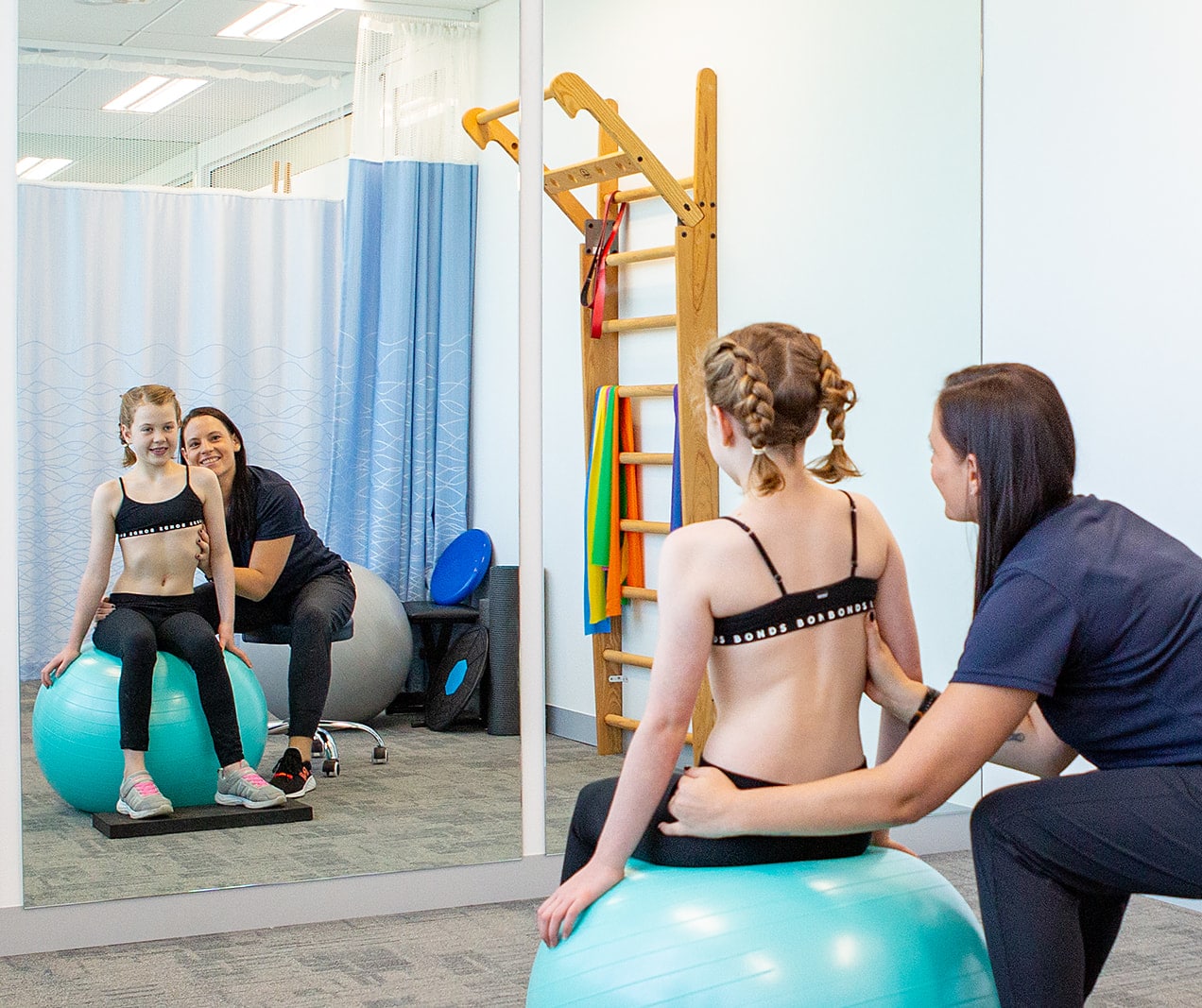
- Physical Therapists: Physical therapists trained in scoliosis-specific exercises, such as ScoliBalance, Schroth or SEAS play a crucial role in non-surgical management. These specialists help patients improve posture and alignment, strength, balance, and spinal stability.
- Chiropractors: Some chiropractors have specialized training in scoliosis with experience in scoliosis bracing and scoliosis-specific exercise. While traditional chiropractic care is not a primary treatment, chiropractic adjustments can provide pain relief and increase spinal mobility. Most chiropractors that specialize in scoliosis come from a Chiropractic BioPhysics (CBP®) or CLEAR background and then do advanced training in scoliosis bracing and scoliosis rehabilitation.
- Scoliosis Specialists: Some clinics focus exclusively on scoliosis, offering a multidisciplinary approach that includes SOSORT-compliant care. These specialists are often well-versed in non-surgical treatments like bracing and scoliosis-specific exercises. ScoliCare has scoliosis specialty clinics around the world focusing exclusively on custom bracing and rehabilitation for scoliosis and hyper-kyphosis.
Treatment Options by Severity
Observation
Observation is often recommended for mild curves, especially in growing children. Regular monitoring ensures that the curve isn’t worsening. X-rays are typically taken every 6 to 12 months to track progression. Both standing and sitting height should also be measured to assess skeletal bone growth rate.
Ideal for:
- Curves under 20 degrees
- Patients who are still growing
While observation alone doesn’t actively correct scoliosis, it allows timely intervention if the curve progresses. Observation is different than the “watch and wait” method as it involves active observation and regularly scheduled checkups.
Scoliosis-Specific Exercises
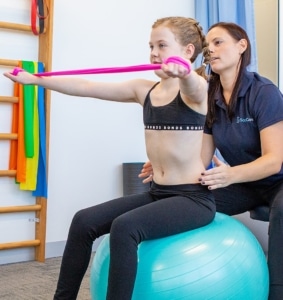
Evidence-based exercises, like those taught in the ScoliBalance program, are a cornerstone of non-surgical scoliosis care. These exercises are personalized to the patient’s curve
pattern and are designed to:
- Improve spinal alignment
- Enhance postural awareness
- Strengthen spinal muscles
- Reduce pain and discomfort
There are 4 criteria established by SOSORT for rehabilitation program to be considered a scoliosis-specific exercise.
- It must teach the patient how to put their spine 3 dimensional corrected position.
- It must included strengthening and stabilization in a corrected position.
- It must incorporate activities of daily living, teach the patient how to hold their spine in a corrected position while doing normal daily activities.
- Education, the patient must full understand what is happening with their spine and they are actively involved in the treatment.
The SOSORT (Scientific Society on Scoliosis Orthopaedic and Rehabilitation Treatment) guidelines strongly endorse scoliosis-specific exercises as an effective intervention for mild to moderate curves.
Ideal for:
- Curves under 40 degrees
- Patients seeking to avoid surgery
Bracing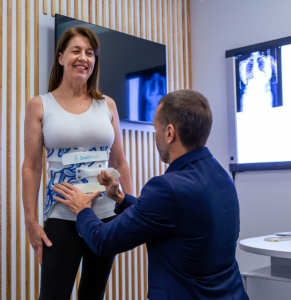
Bracing is a proven method for preventing curve progression and reducing scoliosis curves in some cases, particularly in adolescents who are still growing. The ScoliBrace is one of the most advanced braces available, offering a custom 3D design tailored to the patient’s unique curvature. Unlike traditional braces, the ScoliBrace promotes spinal correction, not just stabilization. In infants, juveniles and adolescents the goals are to prevent curve progression, reduce scoliosis curve size, improve aesthetics and reduce pain. In adults with degenerative scoliosis the goals are to reduce pain, improve activities of daily living and slow or stop progression. Some adults with more flexible spines may also get correction.
Key benefits of bracing include:
- Halting or slowing curve progression
- Potentially reducing the degree of curvature
- Allowing for improved posture and function
- Improving aesthetics (physical appearance)
- Reducing pain
Ideal for:
- Curves between 25 and 45 degrees
- Growing children and teenagers
There is evidence to support non-surgical treatment options for curves up to 60° for individuals that reject surgery. S. Negrini, F. Negrini, C. Fusco, and F. Zaina found bracing to be successful in adolescents with curves between 45°-60° who did not want to undergo surgery (Negrini, Negrini et al. 2011).
Surgery
For severe curves exceeding 45-50 degrees, especially those causing pain, breathing difficulties, or functional limitations, surgery may be necessary. Spinal fusion is the most common procedure, where the curved portion of the spine is fused using rods, screws, and bone grafts. Vertebral body tethering is a non-fusion surgical options for some adolescents who’s curves have continued to progress despite bracing. Lusini et, al. found bracing and exercise to be an effective treatment in patients with adolescence idiopathic scoliosis with curves over 45°
While surgery can effectively correct significant curves, it’s generally considered a last resort due to the risks and recovery time involved and should only be considered when conservative treatment options have failed.
Ideal for:
- Severe scoliosis with progressive curves
- Patients with significant pain or health complications
While surgery can effectively correct significant curves, it’s generally considered a last resort due to the risks and recovery time involved and should only be considered when conservative treatment options have failed.
Managing Degenerative Scoliosis
Degenerative scoliosis typically affects adults due to age-related changes in the spine. Treatment focuses on pain relief and maintaining function. Options include:
- Scoliosis-Specific Exercises: Strengthening core and back muscles can alleviate pain and improve stability.
- Bracing: A custom scoliosis brace can be an effective treatment for adult degenerative scoliosis. The primary focus is to reduce pain, stop or low progression and improves activities of daily living. A retrospective review in Archives of Physical Medicine and Rehabilitation found wearing a low profile brace for 4-6 hours a day can slow down curve progression and in some cases improve scoliotic curves (Palazzo, Montigny et al. 2017). McAviney et al did a systematic review where they found evidence to suggest that spinal bracing treatment may have a positive influence on pain and function in adults with progressive degenerative de novo scoliosis or progressive idiopathic scoliosis(McAviney, Mee et al. 2020).
- Epidural Injections: Steroid injections may reduce nerve irritation caused by scoliosis and provide short–term relief, but repeated steroid injections can also have a catabolic effect and cause joint and ligaments to further degenerate.
- Surgery: In advanced cases, surgical intervention may be necessary to decompress nerves and stabilize the spine.
Supplemental Treatments for Scoliosis
In addition to primary treatments, several complementary therapies can enhance overall well-being and symptom management:
Chiropractic Care
Chiropractic adjustments can help improve spinal mobility and alleviate discomfort. While not a standalone treatment, chiropractic care is a valuable supplement to other therapies.
Massage Therapy
Massage can reduce muscle tension, improve circulation, and relieve pain associated with scoliosis. It’s particularly helpful for managing stress and improving quality of life.
Yoga and Pilates
Both yoga and Pilates emphasize core strength, flexibility, and postural alignment. Modified practices tailored to the scoliosis curve can support long-term spinal health and mobility.
Nutrition and Lifestyle
A balanced diet rich in anti-inflammatory foods and maintaining a healthy weight can positively impact scoliosis management. Staying active and prioritizing overall health play a significant role in treatment outcomes.
Choosing the Right Treatment Team
Finding the right doctor and treatment team is crucial for successful scoliosis management. Look for specialists who:
- Have experience with scoliosis-specific treatments
- Follow evidence-based guidelines, such as SOSORT
- Offer a multidisciplinary approach
- Provide personalized care plans
An Optimistic Outlook
Scoliosis can be a challenging diagnosis, but there are effective options to manage and improve your or your child’s condition. From observation to advanced bracing and scoliosis-specific exercises, non-surgical treatments offer real hope for many patients. And even in severe cases, surgical advancements continue to improve outcomes.
The Right Treatment at the Right Time
ScoliCare is a world leading authority in the non-surgical treatment of scoliosis and hyper-kyphosis. All our treatments follow guidelines established by SOSORT. To see if our scoliosis treatments in Denver are an option for you call 303-955-1919 or click to request a free discover call
With the right care team, a proactive approach, and a commitment to treatment, you can achieve meaningful results. Remember, scoliosis is a journey, and you don’t have to face it alone. Reach out to a scoliosis specialist today to take the first step toward better spinal health.


References:
- McAviney, J., et al. (2020). “A systematic literature review of spinal brace/orthosis treatment for adults with scoliosis between 1967 and 2018: clinical outcomes and harms data.” BMC Musculoskelet Disord 21(1): 87.
- Negrini, S., et al. (2011). “Idiopathic scoliosis patients with curves more than 45 Cobb degrees refusing surgery can be effectively treated through bracing with curve improvements.” Spine J 11(5): 369-380.
- Palazzo, C., et al. (2017). “Effects of Bracing in Adult With Scoliosis: A Retrospective Study.” Arch Phys Med Rehabil 98(1): 187-190.