Scoliosis Assessment
Choosing scoliosis or hyperkyphosis care starts with an accurate and complete assessment
How is Scoliosis Assessed?
The first step in scoliosis or hyperkyphosis care is a thorough assessment. A clear assessment ensures your situation is fully understood and that the most appropriate treatment pathway can be planned for you.
Scoliosis assessments are suitable for children, teens, and adults who:
- Have been told they may have scoliosis or hyperkyphosis
- Have noticed changes in posture (like uneven shoulders or ribcage) or pain
- Already have X-rays and want to understand what they mean
What to Expect
The assessment begins with a review of your medical history, followed by a physical examination.
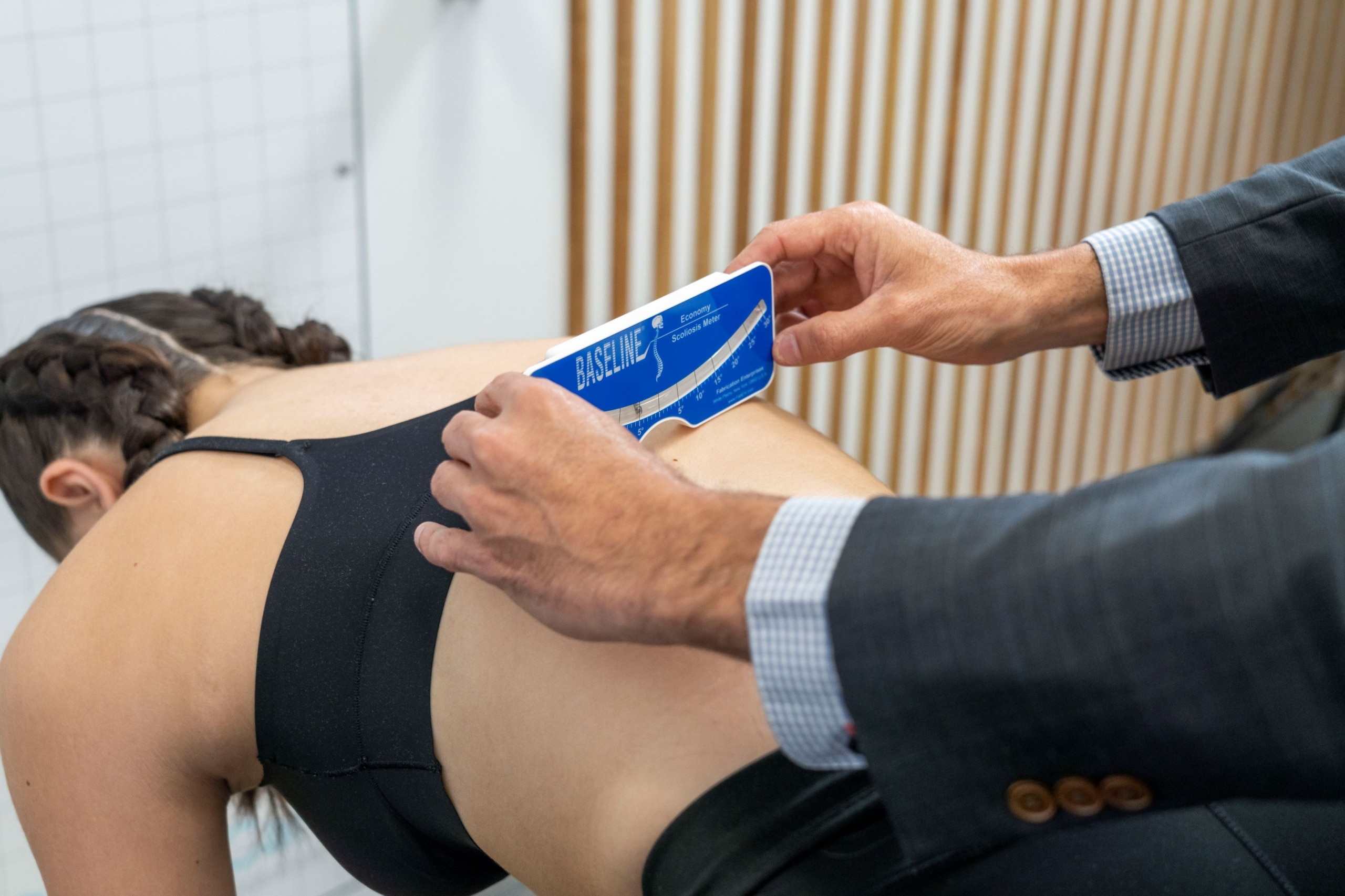
During the physical check, the clinician looks at posture for signs such as uneven shoulders, one side of the ribcage sticking out, or a hunched appearance. They may also use the Adams forward bend test – you bend forward, and they check whether your spine curves. If scoliosis is suspected, the next step is usually an X-ray.

X-Rays & Cobb Angle
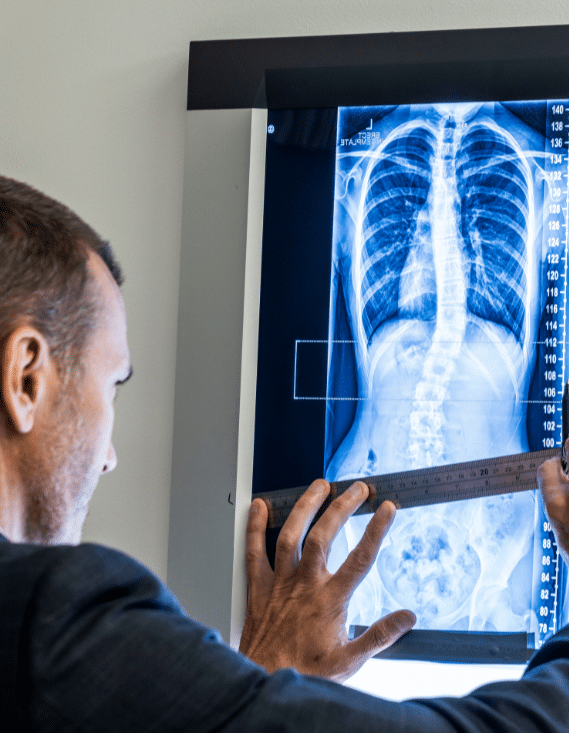
An X-ray is the only way to confirm scoliosis or hyperkyphosis. Standing X-rays are used because they show how the spine looks in its natural, upright position.
From these images, the clinician measures the Cobb angle – the key number that shows how severe the curve is. At ScoliCare, every curve is carefully measured to ensure you get clear guidance on the most appropriate treatment, whether that’s scoliosis specific exercise, custom scoliosis bracing, or, if needed, referral for surgery.
For children, X-rays also help assess bone age, helping predict future growth and risk of progression of the curve. In adults, the focus is on whether the spine is stable and posture is balanced.
What Scoliosis Measurements Mean
Scoliosis is defined as a curve of more than 10 degrees on the Cobb angle, with visible rotation of the vertebrae. If no rotation is seen, the curve isn’t a true scoliosis – it may be postural or positional.
The size of the curve plays a big role in guiding treatment and predicting whether it could worsen over time:
- Small curves (under 20 degrees): Treatment may include scoliosis specific exercises (such as ScoliBalance®) or part-time scoliosis specific bracing.
- Moderate curves (over 25 degrees): Exercises alone are generally not enough, and full-time bracing (such as ScoliBrace®) may be recommended in conjunction with scoliosis specific exercises.
- Severe curves (over 60 degrees): Surgery may be considered.
Want clarity on your next step?
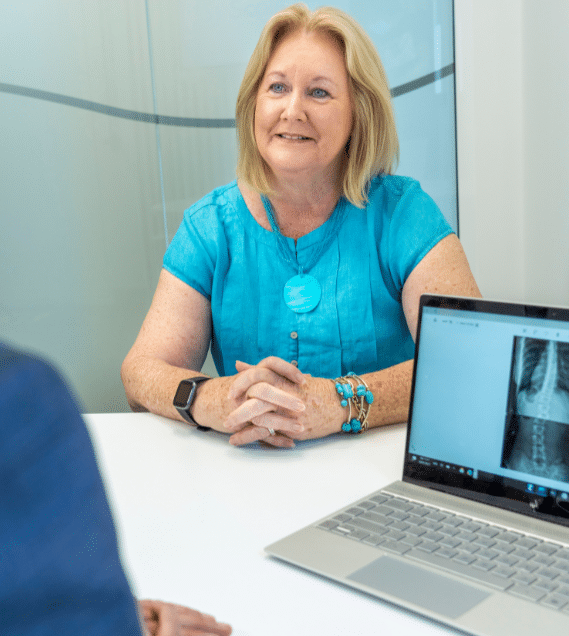
Book an in-person scoliosis assessment at your nearest ScoliCare clinic to discuss your results and possible treatment options.
Book an Assessment for Next Steps