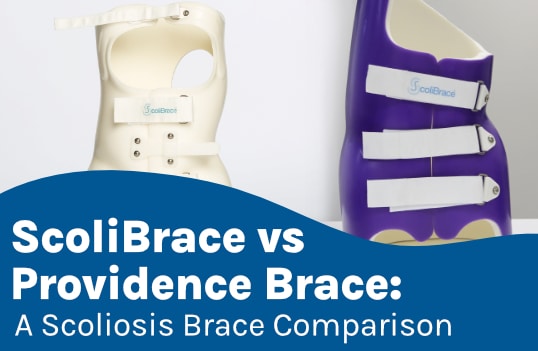
Scoliosis brace design has come a long way over the years. As an early nonsurgical scoliosis treatment option, bracing has evolved from rigid mass-produced braces that immobilize the spine to custom braces designed around movement, comfort, and correction.
The ScoliBrace® is an advanced custom corrective 3D scoliosis brace that’s commonly prescribed for full-time wear; the Providence brace is a traditional rigid nighttime scoliosis brace designed to correct scoliosis during sleep.
It’s important for scoliosis patients to be aware of all treatment options available to them, including the potential benefits and risks of wearing a scoliosis brace.
Scoliosis Bracing
Scoliosis was first described in ancient times, and the first documented scoliosis brace was used in the 16th century (1).
Traditional scoliosis bracing, like traditional scoliosis treatment, has the goal of stopping scoliosis progression, while modern nonsurgical scoliosis treatment has the goal of correcting scoliosis.
Scoliosis causes the spine to curve unnaturally to the side and rotate, and because it’s progressive, it’s likely to get worse over time, particularly if left untreated.
Most cases of scoliosis are idiopathic, meaning no single-known cause, but we know it’s growth that triggers progression, and progression makes the scoliosis more severe and complex to treat (2).
A focus of childhood scoliosis treatment is on counteracting progression while growth is occurring, and nonsurgical scoliosis treatment options include scoliosis-specific rehabilitative exercise, specialized chiropractic care used as adjunctive treatment, and scoliosis bracing (2, 3).
A scoliosis brace is an orthotic device that’s worn tightly around the torso to maintain the upper body and spine’s healthy posture and alignment, but just as different scoliosis treatment approaches offer different potential results, the ScoliBrace® and the Providence brace are designed around different goals.
The ultra-corrective ScoliBrace® represents the culmination of modern brace design and function.
ScoliBrace®
The ScoliBrace® is a custom 3-dimensional scoliosis brace that’s evidence-based and customized to address the specifics of a patient’s posture, scoliosis type, and severity (3)
Because ScoliBrace® design is fully individualized, it uses state-of-the-art scanning software and technology to ensure each brace is comfortable for optimal compliance and corrective potential.
The ScoliBrace® individualizes potential treatment results through the use of an overcorrective approach to improve the spine’s alignment and balance via spinal coupling. As the spine is held in an overcorrective position inside the brace, the brain and body are being retrained together to maintain this position when out of the brace (3).
The ScoliBrace® harnesses principles of spinal coupling, over-correction and Mirror Image, particularly for treating adolescent idiopathic scoliosis; these principles are fundamental components of Chiropractic Biophysics® (CBP) methods and teachings (4). The ScoliBrace® and principles of CBP complement one another by working towards the same goal: improving the spine’s position and body posture (3, 4).


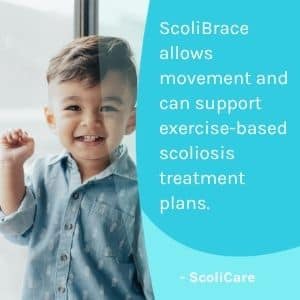
While many traditional scoliosis braces immobilize the spine, the ScoliBrace® was designed with movement in mind, so it can be integrated into a multifaceted treatment plan that combines the power of scoliosis-specific exercise rehabilitation in the form of ScoliBalance® (3).
ScoliBrace® Integration
At ScoliCare clinics around the world, clinicians are trained and certified in the Chiropractic Biophysics® method, ScoliBrace®, and ScoliBalance® for a well-rounded approach to scoliosis treatment (4, 3).
Through integrating distinct scoliosis-specific treatment disciplines into a treatment plan, the spine’s flexibility and strength can be preserved, scoliosis can be impacted on multiple levels, and surgical intervention may be avoided.
While Chiropractic BioPhysics® has a lot to offer as an adjunctive treatment, nonsurgical scoliosis management should be prioritized in the form of 3D corrective bracing and scoliosis-specific exercise programs, as per international guidelines and research (4, 3).
The ScoliBrace® offers a number of potential benefits for patients, including a more customized and flexible brace designed with patient compliance and comfort in mind (3).
Brace-wearing recommendations are case-specific, but in most cases of childhood scoliosis, in particular, the ScoliBrace® is a full time brace, whereas the Providence brace is a nighttime brace.
Providence Brace
When it comes to scoliosis bracing and correction, there is the most corrective potential with growing spines, so bracing is a regular facet of childhood scoliosis treatment.
When it comes to the most prevalent type of scoliosis, adolescent idiopathic scoliosis, this age group isn’t known for their compliance; in fact, compliance is a significant barrier to bracing success. A scoliosis brace needs to be worn exactly as it’s prescribed for efficacy.
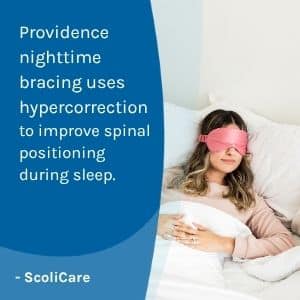
The Providence brace is a traditional scoliosis brace that’s designed more with hypercorrection in mind than comfort (5).
The principle behind the Providence is that if the brace is worn only at night, it doesn’t have to account for movement, so the spine can be held in a hypercorrective position, and intense lateral/rotational pressure is exerted on the spine to improve its position (5).
The Providence brace addresses the issue of compliance by limiting brace wear to nighttime, so for adolescents who are self-conscious about wearing a brace to school and/or around friends, a nighttime brace offers the benefit of wearing the brace in private (5).
The hypercorrective approach is facilitated by the body’s recumbent position as gravity is eliminated, allowing for more intense corrective pressure to be applied to the spine (5).
Through strategically-placed pressure pads, force is exerted on the spine to push it into a straighter alignment and maintain its position, but the potential side effect of this spinal-immobilization approach is the spine’s surrounding muscles, and the spine itself, becoming weaker over time (5).
Considering a contributing factor in scoliosis onset/progression is weak core and back muscles, treatment with the potential to decrease core and back-muscle strength should be considered carefully (3).
In fact, a key focus of nonsurgical scoliosis treatment is on the power of scoliosis-specific exercise to improve the spine’s flexibility, alignment, support, and stability (3).
Because of the intense hypercorrective pressure the Providence applies to the spine and ribs, comfort during sleep is an issue, and while nighttime wear eliminates the issue of compliance during the day, pain and sleep disruptions may be equally problematic (5).
Conclusion
Following a diagnosis of scoliosis, the most important decision patients have to make is the type of treatment to commit to.
It’s important that patients, and their families, are informed about the different scoliosis treatment approaches, types of treatment, and the potential benefits and risks associated with each.
Scoliosis bracing is commonly used as early intervention in juvenile scoliosis patients, and when it comes to adolescent patients and the risk of rapid curve progression, bracing can be more effective when paired with a scoliosis-specific rehabilitative exercise program.
So while a certain brace type offers specific outcomes based on its design and treatment goals, the type of approach the brace is aligned with is also important.
When it comes to the modern ultracorrective ScoliBrace®, the approach is proactive, nonsurgical, and corrective, while the Providence brace is part of a traditional scoliosis treatment approach that can funnel patients towards surgical management.
The ScoliBrace® is customized for optimal correction and comfort and is designed to work in conjunction with a scoliosis-specific exercise plan so muscle weakness doesn’t develop (a common negative effect of scoliosis bracing).
The Providence brace also has correction as a goal, but focuses on the potential of a nighttime brace to hypercorrect the spine’s position during sleep, but the intense pressure exerted on the spine and rib cage can be problematic in other ways.
The Providence nighttime brace does, however, address the brace compliance issue associated with wearing a full-time daytime brace by limiting brace wear to nighttime.
So for patients interested in correcting scoliosis with a proactive nonsurgical treatment plan, the ScoliBrace® has a lot to offer, particularly in terms of reducing curve magnitude while enabling patients to stay active and maintain muscle strength/endurance.
Find Your Nearest Clinic
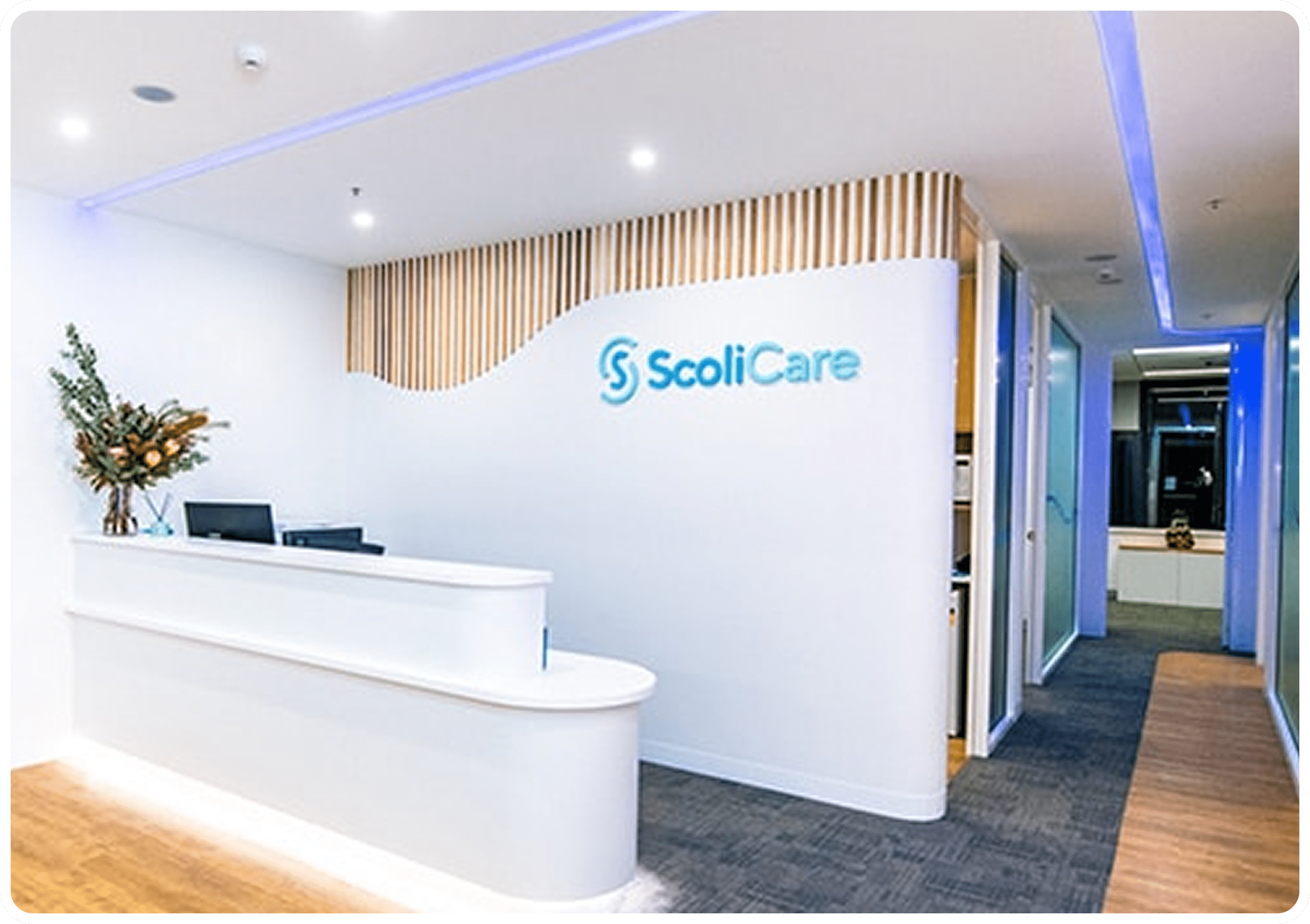
ScoliCare Clinics, affiliates and product providers are in over 200 locations around the world. Find your nearest ScoliCare location here.

References:
- Fayssoux RS, Cho RH, Herman MJ. A history of bracing for idiopathic scoliosis in North America. Clin Orthop Relat Res. 2010 Mar;468(3):654-64. doi: 10.1007/s11999-009-0888-5. Epub 2009 May 22. PMID: 19462214; PMCID: PMC2816759
- Negrini, S., Donzelli, S., Aulisa, A. G., Czaprowski, D., Schreiber, S., de Mauroy, J. C., … & Zaina, F. (2018). 2016 SOSORT guidelines: orthopaedic and rehabilitation treatment of idiopathic scoliosis during growth. Scoliosis and spinal disorders, 13(1), 3
- Marchese R, Du Plessis J, Pooke T, McAviney J. The Improvement of Trunk Muscle Endurance in Adolescents with Idiopathic Scoliosis Treated with ScoliBrace® and the ScoliBalance® Exercise Approach. J Clin Med. 2024 Jan 23;13(3):653. doi: 10.3390/jcm13030653. PMID: 38337346; PMCID: PMC10856658
- Haggard, J. S., Haggard, J. B., Oakley, P. A., & Harrison, D. E. (2017). Reduction of progressive thoracolumbar adolescent idiopathic scoliosis by chiropractic biophysics®(CBP®) mirror image® methods following failed traditional chiropractic treatment: a case report. Journal of Physical Therapy Science, 29(11), 2062-2067
- Yrjönen T, Ylikoski M, Schlenzka D, Kinnunen R, Poussa M. Effectiveness of the Providence nighttime bracing in adolescent idiopathic scoliosis: a comparative study of 36 female patients. Eur Spine J. 2006 Jul;15(7):1139-43. doi: 10.1007/s00586-005-0049-9. Epub 2006 Jan 21. PMID: 16429287; PMCID: PMC3233933
More news
-
 29 August 2025
Understanding brace options is key—while the Milwaukee brace aims to immobilize, the modern ScoliBrace® uses 3D correction to actively reshape posture and the spine.
-
 2 September 2025
Bracing has evolved—unlike the 2D Boston Brace, the ScoliBrace® targets scoliosis in 3D, aiming to improve posture and spinal alignment more effectively.
-
 1 June 2022
Long trips can be a little difficult for brace wearers, especially if sitting for hours at a time. Here are some tips for scoliosis brace wearers that may help make…