

Running with scoliosis may be deemed safe for some, safe with modifications for others, or can be restricted. Potential pros of running include the mental health benefits of staying active, improved circulation, weight management, maintaining core strength and muscle balance; potential cons of running with scoliosis can include increasing compression, strain, and risk of injury.
For people with scoliosis, activity restrictions and recommendations will be case-specific. For some patients, the health benefits of running outweigh the risks, but in other cases, the repeated jarring motion of impact can exacerbate the scoliosis and increase its compressive force.
No two cases of scoliosis are the same, which is why treatment plans need to be fully customized, including exercise recommendations.
Running with Scoliosis
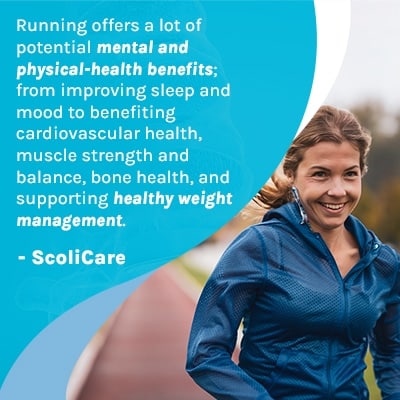 Running offers a lot of potential mental- and physical-health benefits; from improving sleep and mood to benefiting cardiovascular health, muscle strength and balance, bone health, and supporting healthy weight management (1).
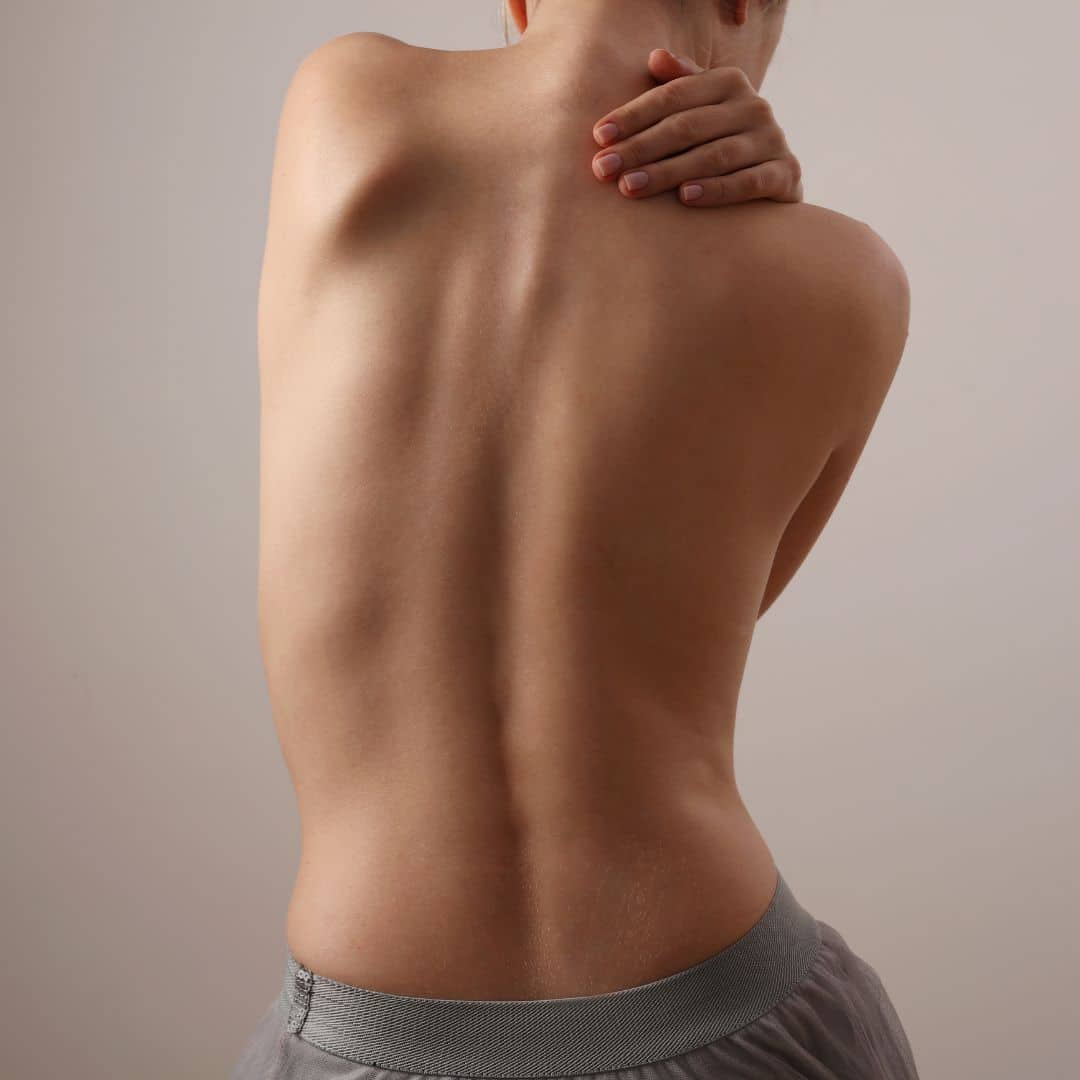
For people with scoliosis, their spines have developed an unnatural sideways spinal curve that also rotates, and this introduces a lot of uneven forces to the spine and body, but that doesn’t mean sports and exercise have to be eliminated (2).
It’s important to understand that following a scoliosis diagnosis, it is best to seek advice regarding sport participation from a patient’s scoliosis treatment provider; this is to ensure the activity won’t impact spinal health negatively, exacerbate the condition’s effects, and/or interfere with treatment.
Whether running is safe for someone with scoliosis depends on several individual factors and varies from person to person. In general, the more severe the scoliosis, the greater the chance that restrictions or modifications to running (or other activities) may be recommended, particularly if symptoms are exacerbated by running
Scoliosis ranges widely in severity from mild to moderate and severe, and there are a number of additional factors that shape a patient’s experience of life with scoliosis.
Patient age is an important factor. Young patients who are still growing experience compression differently as the lengthening motion of growths help counteract the compressive force of the scoliosis.
Scoliosis is compressive for older patients who have reached skeletal maturity, and when it comes to running with scoliosis, there are both benefits and risks involved.
Potential Benefits of Running with Scoliosis
The potential benefits of running with scoliosis are the same mental and physical health benefits people without scoliosis experience, but people with scoliosis are dealing with some extra challenges.
Being diagnosed with a progressive spinal condition can be stressful, and the mental health benefits of regular exercise, running included, can include sleep and mood (3).
When it comes to treatment success, we’re not just talking about improving the health of the spine, but also its surroundings and the entire body, including mental health.
Running can benefit mental health through its mood-enhancing endorphins, improved endurance for more energy, and better sleep: all areas that can shape a person’s mental health (3).
In addition, having better sleep and more energy can help patients handle treatment, particularly scoliosis-specific exercise-based treatment, increasing its potential efficacy.
Cardiovascular Benefits
Heart health also benefits from regular cardiovascular activity, and in some cases of scoliosis, most often severe and/or atypical cases, cardiova
scular function can be affected (4, 5).
Improved heart health means more blood pumping throughout the body for more energy and function, and there are a number of benefits to increasing circulation, particularly when we’re talking about the discs of the spine (4).
Improving Circulation
The spine consists of vertebrae (bones) stacked on top of one another, and to function optimally, the spine has to have its healthy curves and alignment in place; an intervertebral disc sits between adjacent vertebrae, and the health of these discs shape overall spinal health (6).
The discs maintain spinal flexibility, structural support, prevent friction, and act as the spine’s shock absorbers, and they are generally the first spinal structures to degenerate (6).
As the discs have no vascular supply, once damaged, they can be difficult to repair, and maintaining good circulation can help keep the discs hydrated and healthy so they can perform optimally.
Maintaining Core Strength
Scoliosis is an asymmetrical condition, and as running works the body symmetrically, including its muscles, it can help with maintaining core strength and muscle balance.
The spine’s surrounding muscle-health is crucial. The core muscles support and stabilize the spine, so any exercise that engages the muscles symmetrically can counteract a potential effect of scoliosis: muscle imbalance (7).
Maintaining core strength also supports healthy posture: another key factor that shapes spinal health.
Maintaining Bone Health
Because running is a weight-bearing exercise that puts pressures on bones, including spinal vertebrae, they can become stronger and more dense.
Strong bones are essential for mobility and injury prevention.
Maintaining a Healthy Weight
One of the biggest health benefits of regular exercise is weight management. Carrying excess weight increases mechanical stress; it’s estimated that a single pound of body weight adds 4 pounds of pressure on the spine and lower back pain is a common symptom of obesity (8).
There are also direct links between obesity and intervertebral disc degeneration, contributing to issues such as bulging and/or herniated discs (9).
The joints of the spine being exposed to excess weight increases the wear and tear they experience and can contribute to conditions such as osteoarthritis and/or stenosis developing (9).
Potential Cons of Running with Scoliosis
As an asymmetrical condition, scoliosis introduces a lot of uneven forces that can disrupt the body’s overall symmetry through changes to posture and movement.
In addition to postural changes such as uneven shoulders and hips, scoliosis can also cause pelvic obliquity and/or arm- and leg-length discrepancies, potentially causing disruptions to balance, coordination, and gait (10, 11).
The larger the size of an unnatural spinal curve, and the more rotation there is, the higher the severity level, and the more likely it is that noticeable postural and mobility changes will develop.
As a progressive condition, the nature of scoliosis is to become more severe over time, and this makes treatment more challenging, and as progression is triggered by growth, how childhood scoliosis is managed during periods of rapid growth is key (12).
Increasing Compression
For patients who are no longer growing, scoliosis is compressive, and this contributes to scoliosis pain and potential activity restrictions.
For people with scoliosis, in general, activities, sports, and exercise that involve repeated shock from impact aren’t recommended because it introduces more compression to the spine and can exacerbate the curve.
Mechanical stress during activity has to be evenly absorbed and distributed throughout the spine to prevent uneven wear and degenerative changes, and a spine that curves and rotates unnaturally is less functional and more likely to experience injury (13).
Compression is uneven pressure, and once scoliosis becomes compressive, the spine is more vulnerable to the compressive force of the scoliosis, so introducing an activity like running that also introduces stress and potential compression can further strain the spine and/or make the curve worse.
Increasing Postural and Mobility Changes
Because a common effect of scoliosis involves postural asymmetries and a leg-length discrepancy, it can be difficult to maintain an economical gait and stride during running; unhealthy movement patterns can further increase postural deviation and weaken the spine (10, 11).
Poor posture while running can further exacerbate the postural changes already occurring, particularly during progression, and can contribute to increasing mobility changes.
Increased Risk of Injury
People with scoliosis are also more at risk of spinal injury such as painful stress fractures, so while the activity is deemed suitable for some cases of scoliosis, it may be unsafe for others (13).
Part of leading a spine- and scoliosis-friendly lifestyle is cultivating a healthy balanced activity level, and a scoliosis-specific physical therapist can provide guidance.
Conclusion
So can running make scoliosis worse? If running is deemed unsafe for a particular scoliosis patient by their treatment provider, running can worsen the scoliosis by straining the spine and/or increasing compression; however, in some cases, running can offer enough potential benefits to outweigh potential risks. Seeking guidance from a scoliosis specialist is key.
Running offers a number of potential mental and physical health benefits from improving sleep and mood to cardiovascular health, increasing circulation, maintaining a healthy weight and improving the spine’s surrounding muscle strength and balance.
For patients with severe and/or atypical scoliosis, running may be deemed too strenuous, and activity recommendations/restrictions should be adhered to.
For patients told that running can be safe with modifications, this can include opting for short-distance instead of long-distance running to limit the spine’s exposure to repeated shock, focusing on a shorter stride, ensuring proper form while running, maintaining core strength, and running on softer smoother surfaces like running tracks.
Here at ScoliCare, each patient receives a comprehensive initial assessment, and as conditions are further classified based on key factors such as patient age, type, severity, angle of trunk rotation, and curvature location, activity recommendations/restrictions can be customized accordingly.
While no exercise or activity should be attempted before having it approved by a patient’s scoliosis treatment provider, for many scoliosis patients, when approached with caution and awareness, running can offer a number of benefits.
References:
- Hespanhol Junior LC, Pillay JD, van Mechelen W, Verhagen E. Meta-Analyses of the Effects of Habitual Running on Indices of Health in Physically Inactive Adults. Sports Med. 2015 Oct;45(10):1455-68. doi: 10.1007/s40279-015-0359-y. PMID: 26178328; PMCID: PMC4579257.
- Green BN, Johnson C, Moreau W. Is physical activity contraindicated for individuals with scoliosis? A systematic literature review. J Chiropr Med. 2009 Mar;8(1):25-37. doi: 10.1016/j.jcm.2008.11.001. PMID: 19646383; PMCID: PMC2697577
- Oswald F, Campbell J, Williamson C, Richards J, Kelly P. A Scoping Review of the Relationship between Running and Mental Health. Int J Environ Res Public Health. 2020 Nov 1;17(21):8059. doi: 10.3390/ijerph17218059. PMID: 33139666; PMCID: PMC7663387.
- Cantwell JD. Cardiovascular aspects of running. Clin Sports Med. 1985 Oct;4(4):627-40. PMID: 3902253.
- Xiao J, Li T, Wang Y, Zhao Z, Xie J, Zhou J. Effects of severe scoliosis on cardiac structure and function in resting patients: a retrospective study. J Orthop Surg Res. 2025 Jul 19;20(1):681. doi: 10.1186/s13018-025-06113-3. PMID: 40684229; PMCID: PMC12276671.
- Stokes IA, McBride C, Aronsson DD, Roughley PJ. Intervertebral disc changes with angulation, compression and reduced mobility simulating altered mechanical environment in scoliosis. Eur Spine J. 2011 Oct;20(10):1735-44. doi: 10.1007/s00586-011-1868-5. Epub 2011 Jun 26. PMID: 21706360; PMCID: PMC3175868
- Fidler MW, Jowett RL. Muscle imbalance in the aetiology of scoliosis. J Bone Joint Surg Br. 1976 May;58(2):200-1. doi: 10.1302/0301-620X.58B2.932082. PMID: 932082.
- Lucha-López MO, Hidalgo-García C, Monti-Ballano S, Márquez-Gonzalvo S, Ferrández-Laliena L, Müller-Thyssen-Uriarte J, Lucha-López AC. Body Mass Index and Its Influence on Chronic Low Back Pain in the Spanish Population: A Secondary Analysis from the European Health Survey (2020). Biomedicines. 2023 Aug 2;11(8):2175. doi: 10.3390/biomedicines11082175. PMID: 37626672; PMCID: PMC10452522.
- Segar AH, Baroncini A, Urban JPG, Fairbank J, Judge A, McCall I. Obesity increases the odds of intervertebral disc herniation and spinal stenosis; an MRI study of 1634 low back pain patients. Eur Spine J. 2024 Mar;33(3):915-923. doi: 10.1007/s00586-024-08154-4. Epub 2024 Feb 16. PMID: 38363366.
- Xu J, Chen M, Wang X, Luo X. Biomechanical changes in adolescent idiopathic scoliosis during walking: A protocol for systematic review and meta-analysis. Medicine (Baltimore). 2023 Dec 8;102(49):e36528. doi: 10.1097/MD.0000000000036528. PMID: 38065886; PMCID: PMC10713143
- Betsch M, Rapp W, Przibylla A, Jungbluth P, Hakimi M, Schneppendahl J, Thelen S, Wild M. Determination of the amount of leg length inequality that alters spinal posture in healthy subjects using rasterstereography. Eur Spine J. 2013 Jun;22(6):1354-61. doi: 10.1007/s00586-013-2720-x. Epub 2013 Mar 13. PMID: 23479027; PMCID: PMC3676572.
- Negrini S, Donzelli S, Aulisa AG, Czaprowski D, Schreiber S, de Mauroy JC, Diers H, Grivas TB, Knott P, Kotwicki T, Lebel A, Marti C, Maruyama T, O’Brien J, Price N, Parent E, Rigo M, Romano M, Stikeleather L, Wynne J, Zaina F. 2016 SOSORT guidelines: orthopaedic and rehabilitation treatment of idiopathic scoliosis during growth. Scoliosis Spinal Disord. 2018 Jan 10;13:3. doi: 10.1186/s13013-017-0145-8. PMID: 29435499; PMCID: PMC5795289.
- Kuo YL, Chung CH, Huang TW, Tsao CH, Chang SY, Peng CK, Cheng WE, Chien WC, Shen CH. Association between spinal curvature disorders and injury: a nationwide population-based retrospective cohort study. BMJ Open. 2019 Jan 17;9(1):e023604. doi: 10.1136/bmjopen-2018-023604. PMID: 30782710; PMCID: PMC6340633.
The post Does Running Make Scoliosis Worse? Key Insights appeared first on ScoliCare.
More news
-
 1 January 1970
As adolescent idiopathic scoliosis ( a three-dimensional spinal deformity arising in healthy children at or around the time of puberty), is more prevalent and severe in females, maternal health is…
-
 24 February 2023
The short answer is yes, people with scoliosis can live normally. However, it is important to understand the condition and its impact on the individual's life. Scoliosis is a complex…