

Exploring ScoliBrace and ScoliBalance
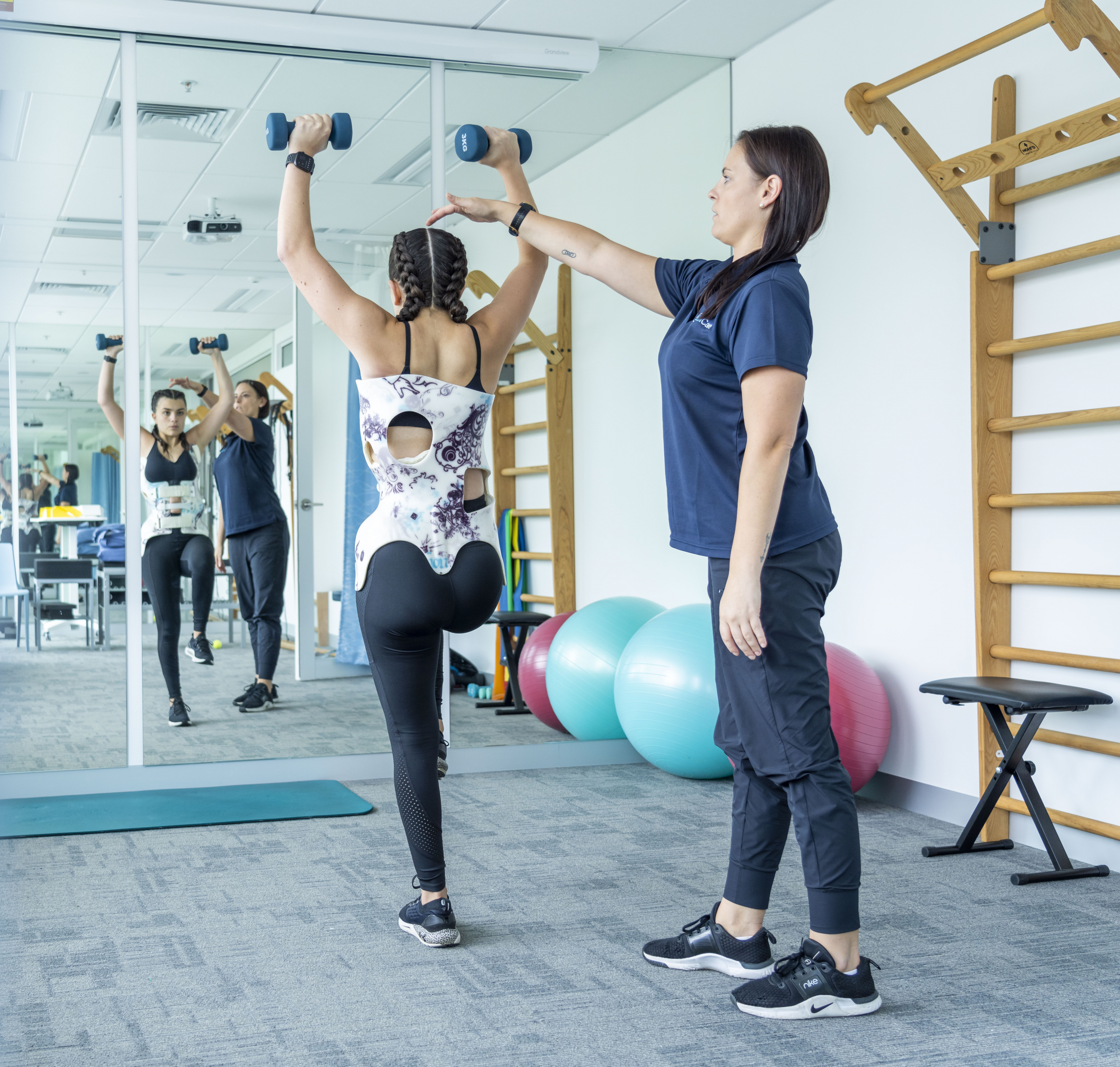
Scoliosis, a condition characterized by an abnormal sideways curvature and rotation of the spine. When it occurs in adolescents without any underlying known cause it is referred to as adolescent idiopathic scoliosis (AIS). Non-surgical treatment options include scoliosis specific rehabilitation by a specifically trained health professional, and custom designed 3D bracing. While surgery is often considered for adolescents with curves over 45 degrees, non-surgical treatments have gained attention for their effectiveness in managing scoliosis as well as preventing progression of the curve. ScoliBalance is a scoliosis specific exercise program that can be used for patients with scoliosis who don’t yet require a brace. The aim is often to reduce the size of the curve or at least prevent progression. ScoliBrace is a custom made brace that can be used in conjunction with ScoliBalance for larger curves.
Understanding Adolescent Idiopathic Scoliosis
Adolescents can develop idiopathic scoliosis during childhood or adolescence and present with varying signs and symptoms. Many patients will experience significant changes in postural symmetry and some may experience pain. During fast growth the curve is at higher risk of progression. The vertebrae and discs in the spine actually change shape and create deviations in posture and appearance. The aim of treatment for adolescence is to prevent progression of the curve and avoid surgery, improve posture and reduce pain. ScoliBrace: A Customized Bracing Solution
ScoliBrace is a revolutionary, custom made over corrective Scoliosis brace that uses a unique 3D scanning system and modern CAD/CAM design principles. This means that the patient does not require a plaster cast and the brace can be designed using modern techniques and principles. The ScoliBrace does not simply apply symmetrical pressure to the body like many traditional braces, instead uses a unique asymmetrical, overcorrective design to harness spinal coupling patterns for adolescents with scoliosis. This results in a mirror image brace that can correct scoliosis in smaller cases (< 30 degrees) and improve scoliosis and prevent progression in larger curves (>30 degrees).
Key Features of the ScoliBrace Treatment Program
- Custom Design: Each ScoliBrace is custom designed for each patient’s scoliosis curvature individually, thus maximizing comfort and correction.
- 3D Scanning Technology: Advanced imaging techniques allow for precise measurements, ensuring a snug fit that targets the specific areas needing correction.
- Enhanced Aesthetics: ScoliBrace offers a more visually appealing design compared to traditional braces, encouraging better compliance among patients.
Research Support for ScoliBrace:
Recent studies have highlighted the effectiveness of ScoliBrace in reducing scoliosis curves and enhancing patients’ quality of life. A pilot study published in 2024 demonstrated significant improvements in the Cobb angle (the measurement taken on X-ray) in patients with AIS AIS. The study reported that patients experienced a reduction in spinal curvature, improvements in posture, and a decrease in scoliosis-related pain (1). It is well established that adolescents who wear a brace are more likely to reduce their risk of the curve progressing to the point of surgical indication (1, 2).
ScoliBalance: A Comprehensive Rehabilitation Approach
ScoliBalance is a physiotherapeutic scoliosis specific exercise (PSSE) program (3). This type of scoliosis treatment incorporates the patient performing active self correction of their posture in 3D (3, 4). From there the patient is taught how to strengthen this corrected posture and integrate it all into their activities of daily living such as sitting at school and participation in sports (3-7). Education of the patient is also fundamental to the program to ensure that the patient is empowered in their scoliosis journey. , education, and posture correction (3. 4). It is designed to empower patients with the tools and knowledge needed to manage their scoliosis actively.
Key Components of ScoliBalance:
- Personalized Exercise Programs: Tailored exercises that are specific to the patient’s curve type, size of the curve and postural presentation. The aim is to strengthen muscles, improve posture, and enhance spinal alignment.
- Education and Awareness: Patients are educated about scoliosis and trained in self-management techniques, fostering a proactive approach to their treatment.
- Postural Training: Techniques to correct posture and maintain proper alignment are integral to ScoliBalance, helping to reduce the curvature over time.
Combining ScoliBrace and ScoliBalance
For many adolescents with moderate to severe curves, a combination of ScoliBrace and ScoliBalance can offer a comprehensive, non-surgical solution to scoliosis management (2, 3). International guidelines indicate that moderate to severe curves benefit from a combination of PSSE and bracing. PSSE alone for these larger curves is less likely to halt progression and improve the curve size. It is important that each child is assessed by an appropriately trained health professional who recognizes these guidelines and assesses and manages patients with scoliosis daily.
Conclusion
Non-surgical treatments for scoliosis, such as ScoliBrace and ScoliBalance, provide patients with viable non-surgical treatment options that are aimed at reducing the curve where possible, and halting progression in large curves.. Supported by research and clinical evidence, these approaches provide effective and individualized options for managing scoliosis, improving patient outcomes, and enhancing the quality of life. As advancements in technology and rehabilitation techniques continue, the future of scoliosis treatment looks increasingly hopeful.
References
- Boon Leong Lim, K., Mak, H.K.W., Abdul Rahaman, S.H., Ong, L.L., Ooi, S.Y.J., & Lee, N.K.L. (2024). A pilot study on the “ScoliBrace” in the treatment of adolescent idiopathic scoliosis. European Journal of Orthopaedic Surgery & Traumatology. Retrieved from PubMed.
- Weinstein, S. L., Dolan, L. A., Wright, J. G., & Dobbs, M. B. (2013). Effects of bracing in adolescents with idiopathic scoliosis. New England Journal of Medicine, 369(16), 1512-1521.
- Negrini, S., Donzelli, S., & McAviney, J. (2023). Current Knowledge on the Different Characteristics of Back Pain in Adults with and without Scoliosis: A Systematic Review. Journal of Clinical Medicine. Retrieved from MDPI.
- Marchese, R., Du Plessis, J., Pooke, T., & McAviney, J. (2024). The Improvement of Trunk Muscle Endurance in Adolescents with Idiopathic Scoliosis Treated with ScoliBrace® and the ScoliBalance® Exercise Approach. Journal of Clinical Medicine, 13(3), 653.
- Monticone, M., Ambrosini, E., Cazzaniga, D., Rocca, B., Ferrante, S., & Fiorentini, R. (2016). Active self-correction and task-oriented exercises reduce spinal deformity and improve quality of life in subjects with mild adolescent idiopathic scoliosis. Results of a randomised controlled trial. European Spine Journal, 25(10), 3120-3129.
- Romano, M., & Negrini, S. (2013). Manual therapy as a conservative treatment for adolescent idiopathic scoliosis: a systematic review. Scoliosis, 8(1), 8.
- Kuru, T., Yeldan, İ., Dereli, E. E., Dikici, F., & Çolak, İ. (2016). The efficacy of three-dimensional Schroth exercises in adolescent idiopathic scoliosis: A randomised controlled clinical trial. Clinical Rehabilitation, 30(2), 181-190.
More news
-
 12 December 2022
By Rosemary Marchese - Head of Education and Research, Physiotherapist Adolescents with idiopathic scoliosis are often going to experience many physical changes, however it’s the emotional challenges that can…
-
 12 January 2022
By Rosemary Marchese, Physiotherapist What Happens in Clinical Practice? What are the typical postural habits of adolescents with idiopathic scoliosis (AIS)? And, are there any that are actually ‘typical’ at…