
When it comes to scoliosis rehabilitation, progress doesn’t just happen in the clinic, it happens in the moments between sessions. That’s why one of the main focuses of the ScoliBalance®, a scoliosis specific rehab program, is helping patients integrate their ‘ScoliCorrection*’ into their everyday activities, also known as Activities of Daily Living (ADLs).
*A ScoliCorrection is a 3D active self correction taught to the patient by the Scoliosis Rehabilitation Therapist at ScoliCare. The patient learns how to actively correct their posture according to their own curve type.
From the very first session, adults and adolescents begin learning how to apply their corrective postures and movement patterns in real-life settings: sitting, standing, walking, and even during sports. This approach draws on principles used in evidence-based programs like Schroth, Scientific Exercise Approach to Scoliosis (SEAS), and Chiropractic Biophysics (CBP), but each patient is given an individualised program using the most appropriate approach for their curve type and posture.
And we start all this from Session 1..why? The answer lies in the science of habit formation and behavioral reinforcement.
What Happens to Scoliosis Rehabilitation During the Other 23 Hours of the Day?
ScoliBalance provides each patient with a set of individualized scoliosis corrective exercises, but those make up only a small part of the day. The real impact comes from what happens in the other 23 hours, walking, sitting, studying, working, relaxing, and everything in between.
If these daily hours are spent in postures that reinforce the scoliosis curve pattern, progress can slow. But when those same moments become opportunities for small corrective adjustments, every minute of the day can support spinal alignment and long-term improvement. This is where functional scoliosis rehab makes a meaningful difference.
How Do Scoliosis Corrections Show Up in Everyday Life and Activities?
We would like to share the story of one of our patients, Lauren, who has been working incredibly hard to integrate her scoliosis corrections into her daily life. Lauren is a dedicated student and a talented volleyball player. She spends long hours balancing academics with intensive training, which makes postural awareness especially important for scoliosis management.
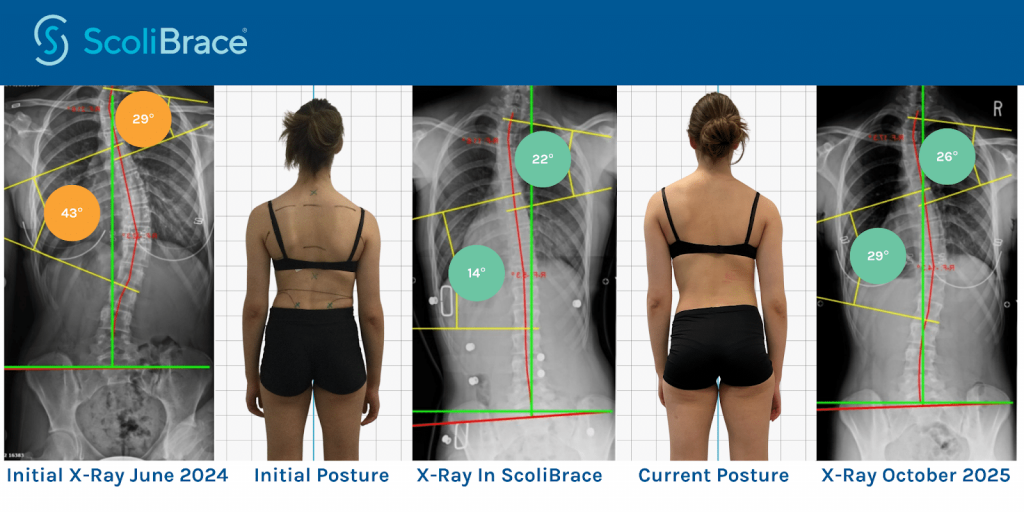
When we first began working together, we focused on simple daily habits — how she sat while studying and how she could practice her corrective posture even while brushing her teeth. As her program progressed, we applied those same scoliosis correction principles to her warm-ups, lifting technique, and eventually into how she plays volleyball. Lauren has shown remarkable commitment and consistency. She can now integrate her ScoliCorrection into most of her volleyball practices, maintaining her alignment through complex movements.
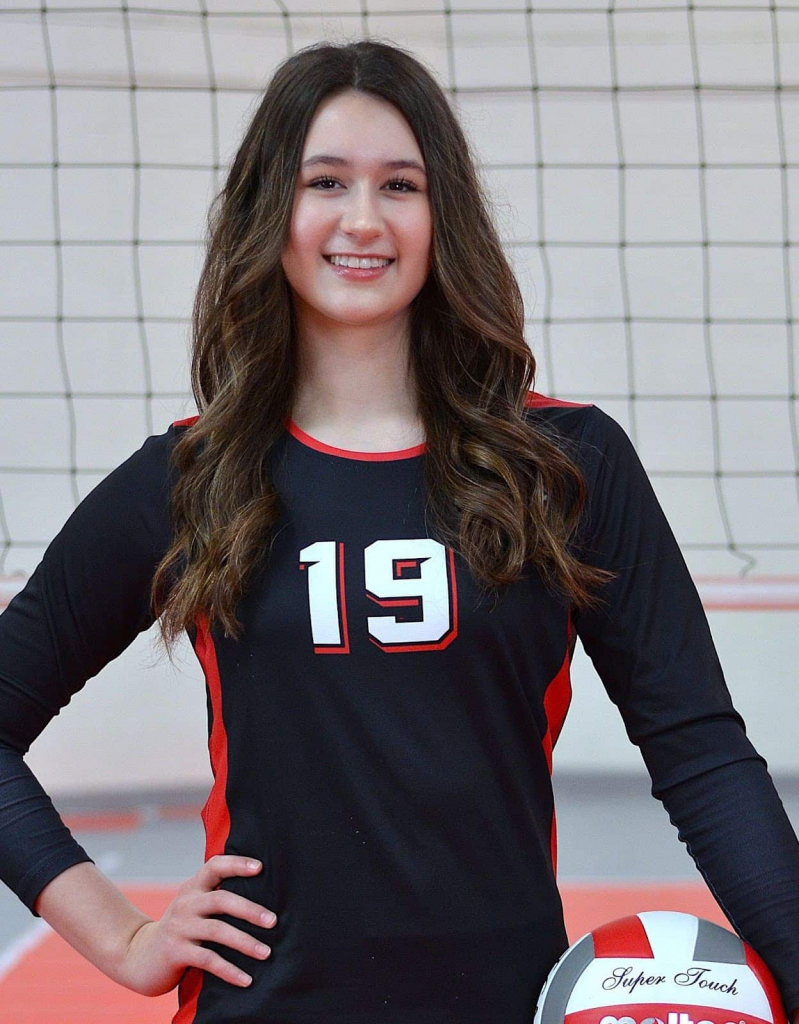
Lauren states that “When I first found out I would have to wear a brace full time it was a scary experience, but the wonderful staff from ScoliCare and my ScoliBalance program quickly showed me I had nothing to fear by providing me with their very best experience and utmost support. They helped me every step of the way with smiles and understanding. The bracing took some getting used to but soon became a regular aspect of my life. Despite previous suspicions, I learned to love my ScoliCare visits. I actually enjoyed learning and challenging myself to do the corrective exercises. Everyone was very adept at clearly and simply providing instructions and made the visits fun through our chats and monthly updates. Once I became more advanced in our ScoliCare exercises I began incorporating it into my daily life. Throughout the day when I’m sitting in my chair at school I try to maintain at least 50% correction. I also try to maintain around 50% when I’m playing volleyball or in team huddles. Although tiring at first, ScoliCare soon too became very present in my life. As many things do, the best results out of ScoliBalance require persistence and determination. But I have found that as long as you maintain a positive attitude and put in the effort, you will find ScoliCare seamlessly making its way into your life. Sometimes the end of your ScoliCare journey can seem endlessly far, but whenever you doubt how far you can go, just remember how far you have come.”
How Is the ScoliBalance® Scoliosis Rehab Program Personalized for Each Patient?
Every patient’s life looks different and so should their scoliosis rehab plan. As scoliosis rehabilitation therapists, we help patients identify the situations that matter most to them and create personalized correction strategies. For some, that means improving desk posture or computer setup. For others, it may involve integrating Schroth-inspired corrective breathing, elongation, or rotational corrections into dance, swimming, lifting, or musical practice.
Even simple activities like brushing your teeth, cooking, or scrolling on your phone can become powerful moments of posture training. Patients learn how to:
- Stand evenly at the sink without collapsing into their curve
- Maintain elongation while cooking or cleaning
- Sit upright with balanced alignment while working or using technology
These small, consistent corrections create a continuous feedback loop that accelerates postural improvement and maintains progress between clinic visits. By connecting therapy to what patients value most, reinforcement becomes not only frequent and immediate, but meaningful.
As patients learn to apply their corrections throughout the day, they develop a stronger mind-body connection. They become more aware of how their body moves, how it feels when aligned versus unaligned, and how they can take control of their scoliosis instead of being controlled by it.
This shift is empowering, transforming scoliosis management from something that happens to them into something they actively shape every day.
How Do I Know If I or My Child Can Benefit From Scoliosis Treatment Like ScoliBalance®?
Early signs of scoliosis often include uneven shoulders or hips, for example, one shoulder sitting higher than the other, a shoulder blade that sticks out more on one side, or a noticeable tilt in the hips. If you notice any of these signs, the ScoliBalance® scoliosis rehabilitation program can help address these postural imbalances and guide the body back toward proper alignment.
Ready to Take the Next Step Toward Better Alignment?
If you or your child has scoliosis and are looking for a non-surgical, movement-based approach that fits into everyday life, ScoliBalance may be right for you. This program blends the best aspects of Schroth, SEAS, and modern scoliosis rehab to create a personalized pathway toward improved posture and spinal health.
Contact ScoliCare East Phoenix today to schedule a consultation and learn how personalized ScoliBalance training can help you move better, feel stronger, and take control of your spine, one movement at a time.
More news
-
 15 July 2024
In recent years, patient-centered care has revolutionized the approach to scoliosis treatment by focusing on the unique needs, preferences and values of each patient. This approach places patients at the…
-
 28 June 2023
By Rebecca Phillips - Exercise Physiologist Team Leader Scoliosis can cause pain of varying intensity and frequency for each person. It is often thought that pain is more common in…