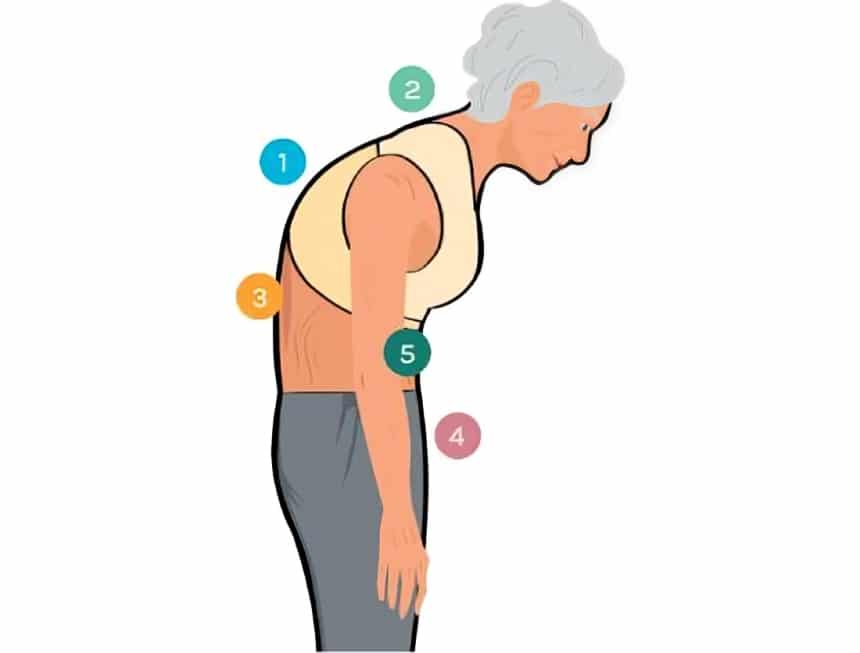
How to Detect Scoliosis
Regular checks for the signs of scoliosis is important for both children and adults. Any changes should always be investigated further.
Scoliosis can appear at any age. Although it is often associated with teenagers, it can develop in childhood, adolescence, or adulthood. Regular checking for the signs of scoliosis is important for everyone – especially growing children and teens during periods of rapid growth, and adults as age-related changes in the spine become more common.
There are a number of warning signs that may indicate scoliosis. These can vary between children and adults. Use the cues below to guide you in recognising possible early warning signs, or use our web-based screening tool, ScoliScreen.
If you notice one or more of these signs, it’s important to consult a trained Scoliosis Clinician for a full assessment.
 Children & Teen Signs
 Forward Bend Test
 Adult & Older-Adult Signs
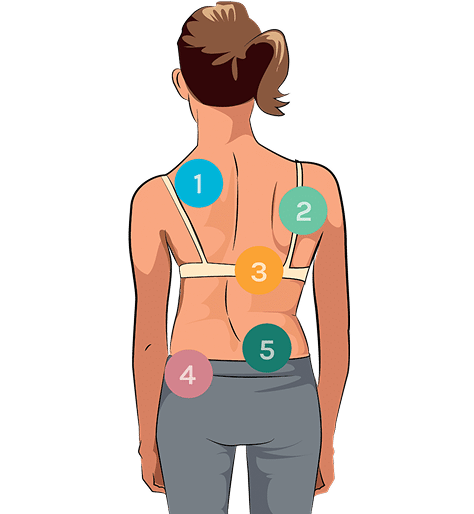
Begin with a standing assessment by having the child stand in a relaxed, neutral posture with feet slightly apart and arms hanging naturally by their sides.
Look for:
- Uneven shoulders
- One prominent shoulder blade
- A visible curve
- Uneven hips
- Asymmetrical waist

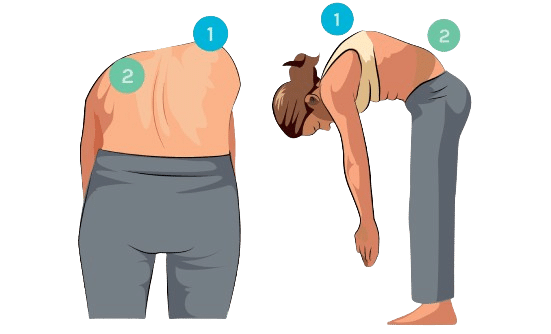
Have the child bend forward with feet together, knees straight, and arms hanging naturally with fingers pointing down.
Look for:
- Upper back hump
- Lower back hump
Early changes in adults often present differently from younger people.
Watch for:
- Forward lean or forward slump
- Loss of standing or sitting height
- Pain (back, hip, or leg)
- Balance difficulties or an increase in falls
- Leaning or shifting to one side