Surgical Referral
Advanced or highly progressive scoliosis curves often require surgical consultation and management.
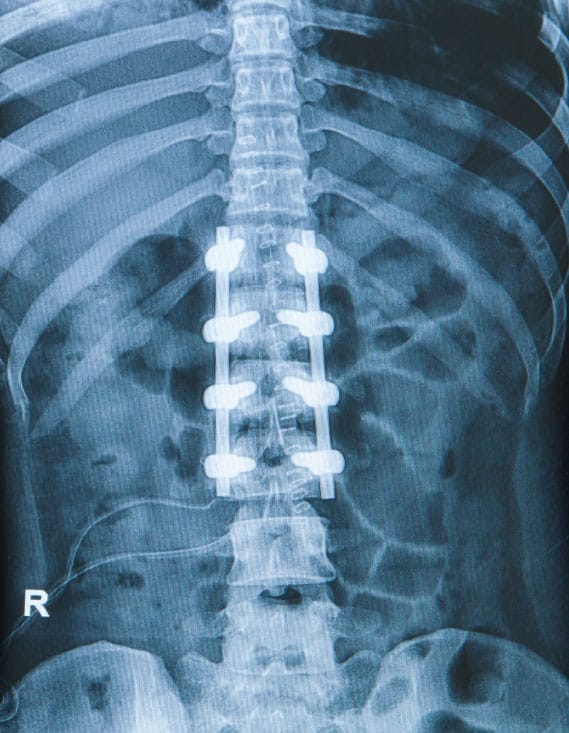
In some cases, surgery is the only option to prevent a scoliosis worsening to a detrimental degree. In other cases, surgical consultation may be recommended prior to starting a non-surgical treatment.
The main reasons to consider a scoliosis surgery are:
- When a scoliosis curve is large and surgical intervention is required to stop it progressing further.
- When the patient is very concerned about how they look because of the scoliosis, and correction cannot be acheived non-surgically
- In severe cases to preserve lung function.
Surgeons assess the patient and their X-rays, CT or MRI scans. Scoliosis surgery often involves fusing the bones of the spine or rods might be inserted to hold the spine straight. New approaches such as tethering also may be an option.
ScoliCare’s approach to finding the best scoliosis treatment for each patient is to start with accurate assessment, and then to discuss treatment options with patients and their family.
We work with scoliosis surgeons to co-manage surgical cases, and will recommend surgical referral where appropriate.
Preventing or Delaying Surgery
While surgery may be the best option for some cases, it is also possible in some cases to prevent or delay scoliosis surgery.
Delaying surgery is often considered for children and teens who are still growing. Because scoliosis surgery stops spinal growth, allowing a young patient to reach closer to their full height before operating is ideal.
Scoliosis bracing has been shown to be effective in preventing most progressive adolescent cases from needing surgery[1].
In larger curves or highly progressive cases where surgery is already indicated, bracing can help stabilise the curve while the spine continues to grow. Once growth is complete, surgery can be performed to reduce the curve and restore alignment.
[1] Weinstein, S. L., Dolan, L. A., Wright, J. G., & Dobbs, M. B. (2013). Effects of bracing in adolescents with idiopathic scoliosis. New England Journal of Medicine, 369(16), 1512–1521.
Success Stories from our Clinics
We’d like to thank our patients for their permission to use their images and results in our case studies. These studies are not to be reproduced without written permission from ScoliCare.

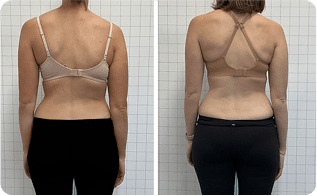
Case – Adolescent Bracing (14 year old female)
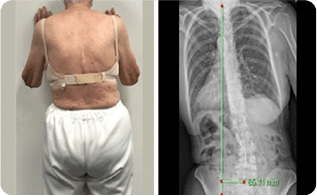
Female aged 14 years with a 34° thoracolumbar curve. Reduction of Severe Scoliosis using a 3D Designed Custom Scoliosis Orthosis in a Young Active Female Read more
Case – Adolescent Bracing (12 year old male)
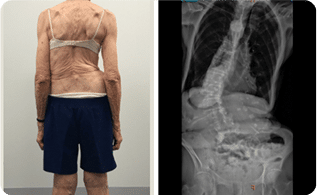
Reduction of a severe scoliosis in a young active male, using a 3D designed custom scoliosis orthosis and ScoliBalance Read more
Case – Scoliosis Specific Exercise (14 year old female)
Reduction of a postural scoliosis in an adolescent using ScoliBalance (Scoliosis Specific Exercise Rehabilitation) Read more
Find Your Nearest Clinic
ScoliCare Clinics, affiliates and product providers are in over 200 locations around the world. Find your nearest ScoliCare location here.